Last Updated on April 24, 2026
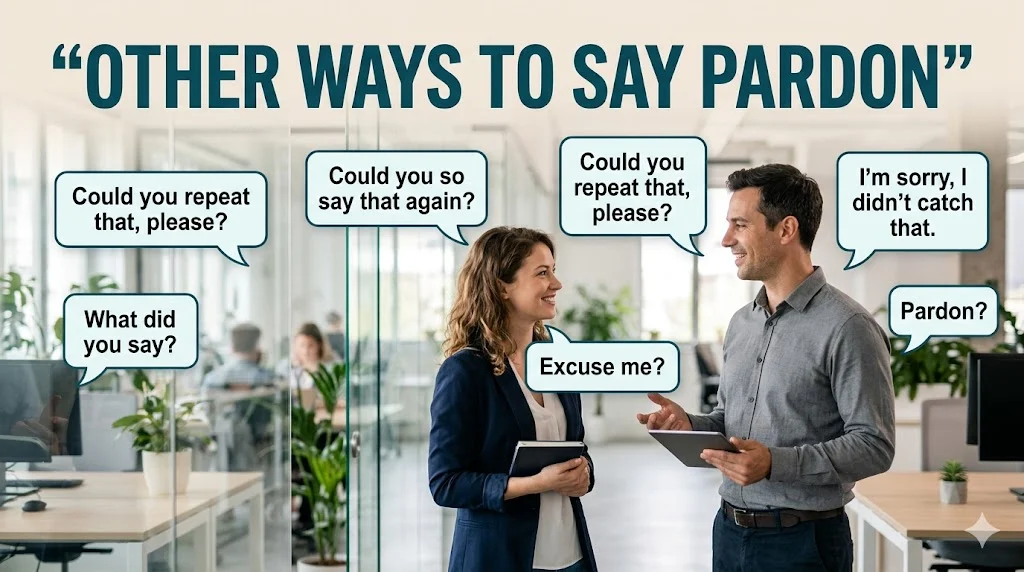
Looking for other ways to say pardon? Try:
Excuse me, I beg your pardon, Sorry?, Could you repeat that?, My apologies.
These alternatives help you sound more natural, polite, and context-appropriate in both formal and informal English.
The word “pardon” is commonly used to ask someone to repeat something, to politely interrupt, or to apologize lightly. While it’s correct and widely understood, it can sometimes sound too formal, outdated, or repetitive depending on the situation.
Learning alternatives to pardon helps you communicate more naturally in modern English. Whether you’re in a professional meeting, casual conversation, or customer service setting, using the right phrase improves clarity and tone.
Expanding your vocabulary also helps you express excitement in English, respond politely, and adapt your tone to different social situations with confidence.
“Politeness in English isn’t just about words it’s about choosing the right tone for the moment.”
Quick Categories
Formal alternatives to “pardon”
- I beg your pardon
- My apologies
- Would you mind repeating that?
- I didn’t quite catch that
Pro Tip: Use these in professional settings or when speaking with clients and seniors.
Casual alternatives
- Sorry?
- What was that?
- Come again?
- Huh?
Pro Tip: Keep tone friendly; avoid overly blunt phrases in polite company.
Professional alternatives
- Could you please repeat that?
- I’m sorry, could you clarify?
- I didn’t hear you clearly
- Would you mind saying that again?
Pro Tip: Always combine with “please” for a more polished impression.
Informal expressions
- Say that again?
- What did you say?
- Sorry, I missed that
- Can you repeat that?
Pro Tip: Best for friends, family, or relaxed conversations.
Common Mistakes
- Using “pardon?” too abruptly
Example: “Pardon?” (sounds blunt without tone) - Overusing formal phrases in casual settings
Example: “I beg your pardon?” with friends - Using informal phrases in professional settings
Example: “Huh?” in a meeting - Not adding politeness markers
Example: “Repeat that.” - Incorrect tone or facial expression
Example: Saying “Sorry?” in a rude tone
What Does “Pardon” Mean?
“Pardon” is a polite expression used to:
- Ask someone to repeat what they said
- Show mild apology
- Interrupt politely
Grammar Note: Often used as a standalone interjection or short question.
Example Sentence:
“Pardon, could you say that again?”
When to Use “Pardon”
- When you didn’t hear something clearly
- In formal or polite conversations
- When interrupting respectfully
- In customer service or hospitality
Spoken vs Written: Mostly spoken
Formal vs Informal: Slightly formal
Is It Professional or Polite to Say “Pardon”?
Polite? ✔️ Yes
Professional? ❌ Not always (can sound old-fashioned)
Business Example:
“Pardon, could you clarify the deadline?”
Better alternative:
“I’m sorry, could you clarify the deadline?”
Pros and Cons of Using “Pardon”
Pros
- Simple and clear
- Polite tone
- Universally understood
- Easy to use
Cons
- Slightly outdated
- Can sound too formal
- Overused in some contexts
- Limited tone flexibility
“Modern English favors natural, context-based alternatives over overly formal words.”
Other Ways to Say “Pardon” (With Examples)
These alternatives will help you sound more fluent, confident, and natural in different situations.
Use them according to tone, context, and audience to communicate politely and clearly.
1. Phrase: Excuse me
Meaning: Polite way to get attention or ask for repetition
Explanation: Very common and versatile
Example Sentence: “Excuse me, could you repeat that?”
Best Use: polite settings
Worst Use: very casual
Tone: polite, neutral
Context Variability: professional / casual / spoken
2. Phrase: I beg your pardon
Meaning: Very formal way to ask for repetition
Explanation: Often used in British English
Example Sentence: “I beg your pardon, could you say that again?”
Best Use: formal speech
Worst Use: casual talk
Tone: formal, respectful
Context Variability: formal / spoken
3. Phrase: Sorry?
Meaning: Quick way to ask for repetition
Explanation: Common in daily conversation
Example Sentence: “Sorry, what did you say?”
Best Use: casual
Worst Use: formal writing
Tone: neutral, friendly
Context Variability: casual / spoken
4. Phrase: Could you repeat that?
Meaning: Direct request for repetition
Explanation: Clear and professional
Example Sentence: “Could you repeat that, please?”
Best Use: professional
Worst Use: none
Tone: polite, neutral
Context Variability: professional / spoken
5. Phrase: I didn’t catch that
Meaning: You missed hearing something
Explanation: Soft and natural expression
Example Sentence: “I didn’t catch that, could you say it again?”
Best Use: casual-professional
Worst Use: none
Tone: polite, natural
Context Variability: spoken / professional
6. Phrase: Come again?
Meaning: Ask for repetition
Explanation: Informal and conversational
Example Sentence: “Come again? I missed that.”
Best Use: casual
Worst Use: formal
Tone: informal, friendly
Context Variability: casual
7. Phrase: What was that?
Meaning: Request clarification
Explanation: Slightly direct
Example Sentence: “What was that? I couldn’t hear you.”
Best Use: casual
Worst Use: formal
Tone: neutral, direct
Context Variability: casual
8. Phrase: Could you say that again?
Meaning: Ask politely for repetition
Explanation: Slightly softer than direct
Example Sentence: “Could you say that again, please?”
Best Use: professional
Worst Use: none
Tone: polite, friendly
Context Variability: professional / spoken
9. Phrase: I’m sorry, could you clarify?
Meaning: Ask for explanation
Explanation: More formal than repetition
Example Sentence: “I’m sorry, could you clarify that point?”
Best Use: business
Worst Use: casual
Tone: formal, polite
Context Variability: professional
10. Phrase: Would you mind repeating that?
Meaning: Very polite request
Explanation: Indirect and respectful
Example Sentence: “Would you mind repeating that?”
Best Use: formal
Worst Use: casual
Tone: respectful, formal
Context Variability: professional
11. Phrase: Sorry, I missed that
Meaning: You didn’t hear properly
Explanation: Casual and common
Example Sentence: “Sorry, I missed that can you repeat?”
Best Use: casual
Worst Use: formal
Tone: friendly, natural
Context Variability: casual
12. Phrase: Can you repeat that?
Meaning: Direct repetition request
Explanation: Simple and clear
Example Sentence: “Can you repeat that?”
Best Use: casual
Worst Use: formal
Tone: direct, neutral
Context Variability: casual
13. Phrase: I didn’t hear you clearly
Meaning: Audio issue
Explanation: Slightly formal
Example Sentence: “I didn’t hear you clearly could you repeat?”
Best Use: professional
Worst Use: casual
Tone: polite, neutral
Context Variability: professional
14. Phrase: Say that again?
Meaning: Ask for repetition
Explanation: Informal
Example Sentence: “Say that again?”
Best Use: friends
Worst Use: workplace
Tone: casual
Context Variability: casual
15. Phrase: Could you clarify that?
Meaning: Ask for explanation
Explanation: More formal
Example Sentence: “Could you clarify that point?”
Best Use: business
Worst Use: casual
Tone: formal
Context Variability: professional
“Small changes in wording can make your English sound more natural and confident instantly.”
Mini Quiz / Self-Check
1. Most formal alternative?
A. Sorry?
B. I beg your pardon
C. What?
Answer: B
2. Best for workplace?
A. Huh?
B. Could you repeat that?
C. Say that again?
Answer: B
3. Casual option?
A. Would you mind repeating that?
B. Come again?
C. My apologies
Answer: B
Comparison Table: Top Alternatives
| Phrase | Tone | Best Use |
|---|---|---|
| Excuse me | Neutral | All settings |
| I beg your pardon | Formal | Formal speech |
| Sorry? | Casual | Everyday talk |
| Could you repeat that? | Professional | Work |
| I didn’t catch that | Neutral | Mixed |
| Come again? | Informal | Friends |
| What was that? | Casual | Everyday |
| Could you say that again? | Neutral | Work + casual |
| I’m sorry, could you clarify? | Formal | Business |
| Would you mind repeating that? | Formal | Polite requests |
FAQs
1. Is “pardon” outdated?
Slightly it’s still correct but less common in modern casual English.
2. What’s the most professional alternative?
“Could you please repeat that?” or “I’m sorry, could you clarify?”
3. Is “sorry?” rude?
No, but tone matters keep it polite.
4. Can I use informal phrases at work?
Avoid them in formal settings; use professional alternatives.
5. What’s safest in all situations?
“Excuse me, could you repeat that?”
Conclusion
Learning other ways to say pardon helps you sound more natural, polite, and confident in English. By choosing the right phrase for each context, you improve both clarity and professionalism.
Practice these alternatives daily in conversations and meetings to build strong communication skills and tone awareness.

Owen Price is a skilled content writer at Synofind.com, known for crafting clear, engaging and reader-focused content. He brings a thoughtful approach to research and storytelling, ensuring every piece is accurate, concise and easy to understand.