Last Updated on April 22, 2026
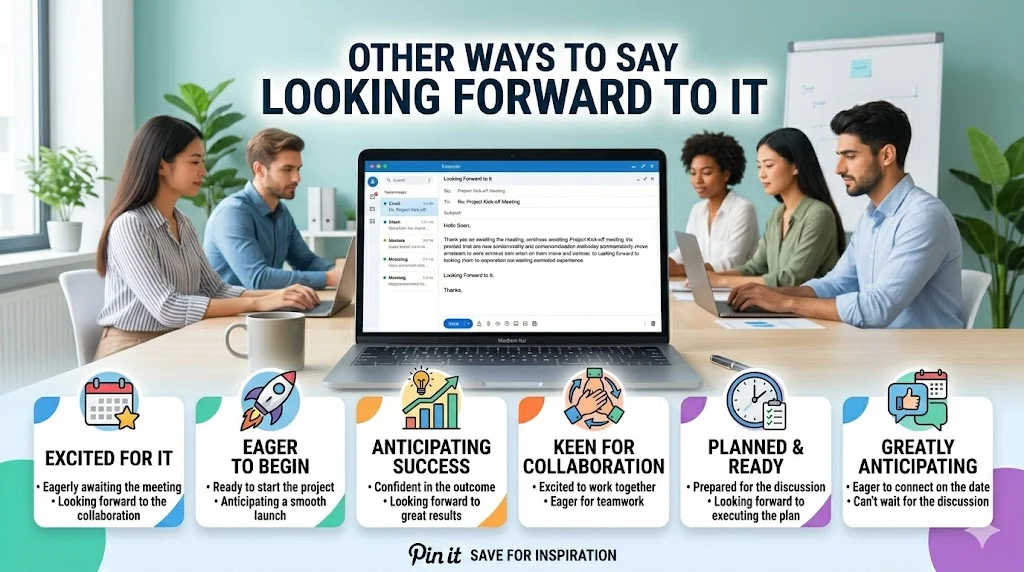
If you want alternatives to looking forward to it, try:
I’m excited about it, I eagerly anticipate it, Can’t wait, I’m keen on it, I’m expecting it with enthusiasm.
These phrases help you sound more natural, professional, and expressive in both spoken and written English.
The phrase “looking forward to it” is commonly used to express anticipation, excitement, or positive expectation about a future event. It works well in emails, conversations, and professional communication.
However, repeating it too often can make your language sound predictable or repetitive. Learning alternatives to “looking forward to it” helps you:
- Improve fluency and vocabulary
- Match tone to formal or informal contexts
- Express enthusiasm more precisely
Using varied expressions also helps you express excitement in English more naturally and confidently.
“The right phrase can make your English sound more engaging, polished, and professional.”
Why You Need Alternatives
- Professional communication: Avoid repetition in emails
- Tone flexibility: Choose formal, casual, or enthusiastic wording
- Stronger impact: More expressive language creates better impressions
- Better engagement: Makes your communication feel more human
Quick Categories
Formal alternatives to “looking forward to it”
- I eagerly anticipate it
- I look forward to the opportunity
- I await it with interest
- I anticipate it with enthusiasm
Pro Tip: Use these in business emails, client communication, and formal writing.
Casual alternatives
- Can’t wait
- I’m excited
- Really looking forward
- So excited for it
Pro Tip: Great for texting, social media, or informal conversations.
Professional alternatives
- I look forward to our meeting
- I’m eager to collaborate
- I anticipate working together
- I’m keen on this opportunity
Pro Tip: Add context (meeting, project, event) for clarity.
Informal expressions
- Counting down the days
- Pumped for it
- Super excited
- Hyped about it
Pro Tip: Use only with friends or relaxed environments.
Common Mistakes
- Overusing the phrase
Example: “Looking forward to it” in every email - Using informal phrases in formal emails
Example: “Can’t wait!!!” in a business email - Lack of context
Example: “Looking forward to it.” (What exactly?) - Incorrect grammar
Example: “I look forward to meet you” ❌
Correct: “I look forward to meeting you” ✔️ - Sounding robotic
Example: Always using the same phrase without variation
What Does “Looking Forward to It” Mean?
Definition:
It means you feel positive anticipation or excitement about something that will happen in the future.
Grammar Note:
“Look forward to” is followed by a noun or gerund (verb + ing)
✔️ “Looking forward to meeting you”
❌ “Looking forward to meet you”
Example:
“I’m looking forward to our meeting tomorrow.”
When to Use “Looking Forward to It”
- Emails (professional and casual)
- Meetings or appointments
- Events or social plans
- Work collaborations
Spoken vs Written: Works in both
Formal vs Informal: Neutral, but slightly informal in tone
Is It Professional or Polite to Say “Looking Forward to It”?
Polite? ✔️ Yes
Professional? ❌ Not always (can sound basic in formal emails)
Business Example:
“I look forward to discussing this further in our meeting.”
Pros and Cons of Using “Looking Forward to It”
Pros
- Simple and natural
- Friendly tone
- Common usage
- Easy to understand
Cons
- Too informal for some professional contexts
- Overused
- Limited emotional range
- Not ideal for formal writing
“Small changes in wording can make a big difference in how professional you sound.”
Other Ways to Say “Looking Forward to It” With Examples
These alternatives will help you sound more fluent, confident, and natural in different situations.
Use them according to tone, context, and audience to express excitement, admiration, or approval.
- Phrase: I eagerly anticipate it
Meaning: Strong expectation and excitement
Explanation: Formal and enthusiastic
Example Sentence: “I eagerly anticipate our upcoming discussion.”
Best Use: Formal emails
Worst Use: Casual chats
Tone: Formal, polished
Context Variability: professional
- Phrase: I’m excited about it
Meaning: Expresses enthusiasm
Explanation: Friendly and common
Example Sentence: “I’m excited about the project launch.”
Best Use: Casual work
Worst Use: Formal letters
Tone: Positive, warm
Context Variability: casual / professional
- Phrase: Can’t wait
Meaning: Strong excitement
Explanation: Informal expression
Example Sentence: “Can’t wait for the weekend!”
Best Use: Friends
Worst Use: Business emails
Tone: Informal, energetic
Context Variability: casual
- Phrase: I look forward to the opportunity
Meaning: Professional anticipation
Explanation: Polite and formal
Example Sentence: “I look forward to the opportunity to work together.”
Best Use: Job emails
Worst Use: Casual texts
Tone: Formal, respectful
Context Variability: professional
- Phrase: I’m keen on it
Meaning: Interested and enthusiastic
Explanation: Slightly British tone
Example Sentence: “I’m keen on starting this project.”
Best Use: Professional
Worst Use: Very formal writing
Tone: Neutral, positive
Context Variability: casual / professional
- Phrase: I anticipate it with enthusiasm
Meaning: Strong positive expectation
Explanation: Formal tone
Example Sentence: “I anticipate it with enthusiasm.”
Best Use: Formal writing
Worst Use: Casual speech
Tone: Formal, expressive
Context Variability: professional
- Phrase: I’m really looking forward
Meaning: Strong anticipation
Explanation: Slightly more expressive
Example Sentence: “I’m really looking forward to the event.”
Best Use: Casual work
Worst Use: Formal writing
Tone: Friendly, warm
Context Variability: casual / professional
- Phrase: I await it with interest
Meaning: Curious anticipation
Explanation: Formal tone
Example Sentence: “I await it with interest.”
Best Use: Formal emails
Worst Use: Casual speech
Tone: Formal, neutral
Context Variability: professional
- Phrase: I’m thrilled about it
Meaning: High excitement
Explanation: Strong emotional tone
Example Sentence: “I’m thrilled about the opportunity.”
Best Use: Positive contexts
Worst Use: Serious formal
Tone: Excited, expressive
Context Variability: casual / professional
- Phrase: I’m eager for it
Meaning: Ready and excited
Explanation: Slightly formal
Example Sentence: “I’m eager for the results.”
Best Use: Professional
Worst Use: Informal jokes
Tone: Positive, direct
Context Variability: professional
- Phrase: I’m counting down the days
Meaning: Strong anticipation
Explanation: Informal and expressive
Example Sentence: “I’m counting down the days to the trip.”
Best Use: Friends
Worst Use: Business
Tone: Excited, casual
Context Variability: casual
- Phrase: I’m pumped for it
Meaning: Very excited
Explanation: Slang expression
Example Sentence: “I’m pumped for the concert.”
Best Use: Friends
Worst Use: Formal settings
Tone: Energetic, informal
Context Variability: casual
- Phrase: I’m enthusiastic about it
Meaning: Positive anticipation
Explanation: Professional tone
Example Sentence: “I’m enthusiastic about the collaboration.”
Best Use: Work emails
Worst Use: Very casual
Tone: Professional, positive
Context Variability: professional
- Phrase: I’m delighted about it
Meaning: Happy and pleased
Explanation: Polite and warm
Example Sentence: “I’m delighted about the opportunity.”
Best Use: Formal emails
Worst Use: Slang context
Tone: Polite, warm
Context Variability: professional
- Phrase: I’m excited to be part of it
Meaning: Inclusion excitement
Explanation: Personal and positive
Example Sentence: “I’m excited to be part of the team.”
Best Use: Workplace
Worst Use: Formal reports
Tone: Warm, engaging
Context Variability: casual / professional
- Phrase: I’m looking ahead to it
Meaning: Future anticipation
Explanation: Slight variation
Example Sentence: “I’m looking ahead to the meeting.”
Best Use: Professional
Worst Use: Casual slang
Tone: Neutral
Context Variability: professional
- Phrase: I’m eager to get started
Meaning: Readiness and excitement
Explanation: Action-oriented
Example Sentence: “I’m eager to get started on this project.”
Best Use: Work
Worst Use: Social events
Tone: Professional, proactive
Context Variability: professional
- Phrase: I’m excited for what’s coming
Meaning: Anticipation
Explanation: General use
Example Sentence: “I’m excited for what’s coming next.”
Best Use: Casual
Worst Use: Formal
Tone: Positive, broad
Context Variability: casual
- Phrase: I’m optimistic about it
Meaning: Positive expectation
Explanation: Professional tone
Example Sentence: “I’m optimistic about the outcome.”
Best Use: Work
Worst Use: Casual slang
Tone: Professional, hopeful
Context Variability: professional
- Phrase: I’m anticipating it
Meaning: Expecting positively
Explanation: Neutral tone
Example Sentence: “I’m anticipating great results.”
Best Use: Work
Worst Use: Casual talk
Tone: Neutral
Context Variability: professional
- Phrase: I’m excited to see how it turns out
Meaning: Curious excitement
Explanation: Balanced tone
Example Sentence: “I’m excited to see how it turns out.”
Best Use: Work + casual
Worst Use: Formal docs
Tone: Friendly
Context Variability: mixed
- Phrase: I’m ready for it
Meaning: Prepared and eager
Explanation: Confident tone
Example Sentence: “I’m ready for the challenge.”
Best Use: Motivational
Worst Use: Formal emails
Tone: Confident
Context Variability: casual
- Phrase: I’m happy about it
Meaning: Positive feeling
Explanation: Simple expression
Example Sentence: “I’m happy about the decision.”
Best Use: Casual
Worst Use: Formal
Tone: Warm
Context Variability: casual
- Phrase: I’m excited to experience it
Meaning: Anticipation of experience
Explanation: Personal tone
Example Sentence: “I’m excited to experience this event.”
Best Use: Social
Worst Use: Formal
Tone: Personal
Context Variability: casual
- Phrase: I’m keen to see it
Meaning: Interested
Explanation: Neutral tone
Example Sentence: “I’m keen to see the results.”
Best Use: Work
Worst Use: Very formal
Tone: Neutral
Context Variability: professional
- Phrase: I’m looking forward with excitement
Meaning: Strong anticipation
Explanation: Emphasized version
Example Sentence: “I’m looking forward with excitement.”
Best Use: Mixed
Worst Use: Formal docs
Tone: Expressive
Context Variability: casual / professional
- Phrase: I’m excited for the opportunity
Meaning: Career enthusiasm
Explanation: Professional tone
Example Sentence: “I’m excited for the opportunity to contribute.”
Best Use: Job emails
Worst Use: Casual
Tone: Professional
Context Variability: professional
- Phrase: I’m thrilled to be involved
Meaning: Strong excitement
Explanation: Positive and engaging
Example Sentence: “I’m thrilled to be involved in this project.”
Best Use: Work
Worst Use: Formal writing
Tone: Enthusiastic
Context Variability: professional
- Phrase: I’m glad about it
Meaning: Simple positive feeling
Explanation: Neutral
Example Sentence: “I’m glad about the outcome.”
Best Use: Casual
Worst Use: Formal
Tone: Neutral
Context Variability: casual
- Phrase: I’m excited to move forward
Meaning: Progress-focused
Explanation: Professional tone
Example Sentence: “I’m excited to move forward with the plan.”
Best Use: Business
Worst Use: Casual slang
Tone: Professional
Context Variability: professional
“Using the right alternative helps you sound more natural, confident, and context-aware.”
Mini Quiz / Self-Check
- Best formal option?
A. Can’t wait
B. I eagerly anticipate it
C. I’m pumped
Answer: B - Best casual option?
A. I anticipate it with enthusiasm
B. Can’t wait
C. I await it with interest
Answer: B - Best for job email?
A. I’m excited for the opportunity
B. I’m pumped
C. Counting down the days
Answer: A
Comparison Table: Top Alternatives
| Phrase | Tone | Best Use |
|---|---|---|
| I eagerly anticipate it | Formal | Business emails |
| I’m excited about it | Neutral | Work & casual |
| Can’t wait | Informal | Friends |
| I look forward to the opportunity | Professional | Job emails |
| I’m enthusiastic about it | Professional | Workplace |
| I’m thrilled about it | Expressive | Positive events |
| I’m eager to get started | Professional | Work tasks |
| I’m optimistic about it | Professional | Reports |
| I’m excited to move forward | Professional | Business plans |
| I’m keen on it | Neutral | Work/casual |
FAQs
1. Is “looking forward to it” professional?
Yes, but it can sound basic. Use alternatives for stronger impact.
2. What is the most formal alternative?
“I eagerly anticipate it” or “I await it with interest.”
3. Can I use “can’t wait” in emails?
Only in informal emails, not professional ones.
4. What’s best for job interviews?
“I’m excited for the opportunity” or “I look forward to contributing.”
5. How do I sound more natural?
Use varied phrases and match tone to context.
Conclusion
Learning other ways to say “looking forward to it” helps you communicate with greater clarity, professionalism, and confidence. By choosing the right phrase, you can match tone to context and avoid repetition.
Practice using these alternatives daily in emails, conversations, and professional settings to improve fluency and express excitement in English more naturally.

Liam Reed is a skilled content writer at Synofind.com, known for crafting clear, engaging and well-researched pieces. His work focuses on accuracy, readability and delivering value to readers. He consistently produces content that informs and connects.