Last Updated on April 22, 2026
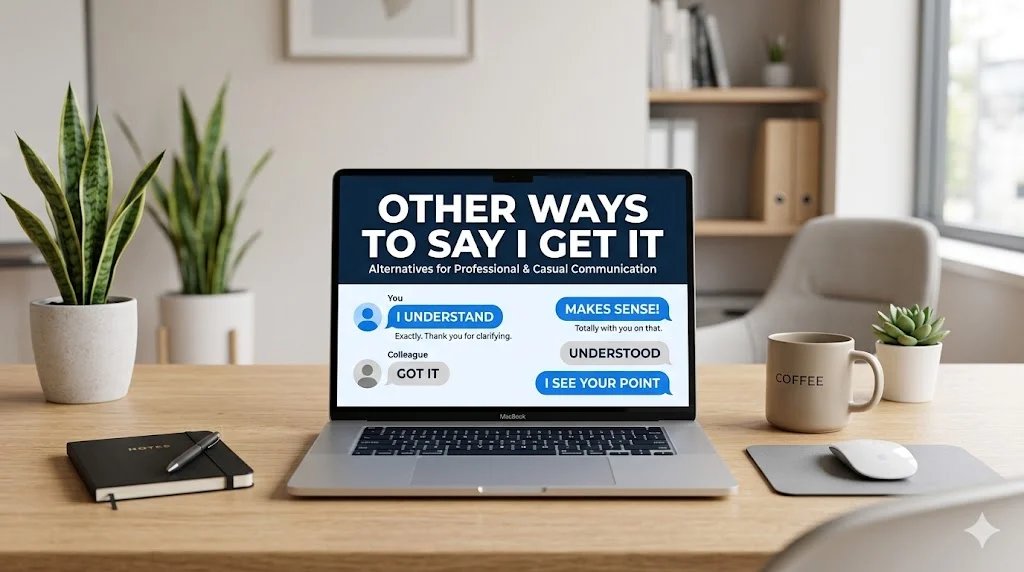
Looking for other ways to say I get it? Try:
I understand, That makes sense, I see your point, Got it, I follow you.
These alternatives help you sound more professional, clear, and context-appropriate in both spoken and written English.
The phrase “I get it” is commonly used to show understanding, agreement, or acknowledgment. While it’s simple and effective, it can sometimes sound too casual or repetitive, especially in professional settings.
Learning alternatives to “I get it” allows you to communicate more precisely and adapt your tone depending on the situation. Whether you’re in a meeting, writing an email, or having a conversation, choosing the right phrase improves clarity and professionalism.
Expanding your vocabulary also helps you express excitement in English, show empathy, and respond more naturally in different contexts.
“The right response doesn’t just show understanding—it builds clarity and trust.”
Quick Categories
Formal alternatives to “I get it”
- I understand
- I comprehend
- I acknowledge your point
- That is clear
Pro Tip: Use these in emails, meetings, or professional communication.
Casual alternatives
- Got it
- I see
- Makes sense
- I hear you
Pro Tip: Perfect for everyday conversations and friendly chats.
Professional alternatives
- I understand your perspective
- That makes perfect sense
- I see your point
- I appreciate the clarification
Pro Tip: Combine with a follow-up response to sound more engaged.
Informal expressions
- Okay, I get you
- I’m with you
- Right, I see
- Ah, gotcha
Pro Tip: Use only in relaxed or peer-level conversations.
“Small changes in wording can instantly make your English sound more polished.”
Common Mistakes
- Using “I get it” in formal emails
Example: “I get it, thanks.” - Sounding dismissive
Example: “Yeah yeah, I get it.” - Repeating the same phrase too often
Example: “I get it… I get it… I get it…” - Not showing engagement
Example: “I get it.” (No follow-up) - Using informal tone in professional settings
Example: “Gotcha, boss.”
What Does “I Get It” Mean?
“I get it” means you understand something clearly, whether it’s an idea, explanation, or situation.
It is commonly used in spoken English and informal writing.
Example Sentence:
“I get it now—you were explaining the new process.”
When to Use “I Get It”
- During conversations to show understanding
- When someone explains something
- In casual messages or chats
- When acknowledging instructions
Spoken vs Written:
More common in spoken English
Formal vs Informal:
Mostly informal
Is It Professional or Polite to Say “I Get It”?
Polite? ✔️ Yes
Professional? ❌ No (in most cases)
Business Example:
Instead of: “I get it.”
Say: “I understand your point and will proceed accordingly.”
Pros and Cons of Using “I Get It”
Pros
- Simple and natural
- Easy to use
- Widely understood
- Quick response
Cons
- Too informal for work
- Can sound dismissive
- Overused
- Lacks depth
Other Ways to Say “I Get It” With Examples
These alternatives will help you sound more fluent, confident, and natural in different situations.
Use them according to tone, context, and audience.
1. Phrase: I understand
Meaning: You fully grasp the idea
Explanation: Most common professional alternative
Example Sentence: “I understand your concerns about the deadline.”
Best Use: professional emails
Worst Use: casual jokes
Tone: neutral, polite
Context Variability: professional / spoken
2. Phrase: That makes sense
Meaning: The idea is logical
Explanation: Shows agreement and understanding
Example Sentence: “That makes sense given the data.”
Best Use: discussions
Worst Use: emotional topics
Tone: neutral, agreeable
Context Variability: casual / professional
3. Phrase: I see your point
Meaning: You recognize someone’s perspective
Explanation: Useful in discussions or debates
Example Sentence: “I see your point about the timeline.”
Best Use: meetings
Worst Use: simple instructions
Tone: respectful, thoughtful
Context Variability: professional
4. Phrase: Got it
Meaning: You understood quickly
Explanation: Short and direct
Example Sentence: “Got it, I’ll handle that.”
Best Use: quick replies
Worst Use: formal emails
Tone: casual, efficient
Context Variability: informal / spoken
5. Phrase: I follow you
Meaning: You understand the explanation
Explanation: Often used in conversations
Example Sentence: “I follow you so far.”
Best Use: discussions
Worst Use: formal writing
Tone: conversational
Context Variability: spoken
6. Phrase: I comprehend
Meaning: Deep understanding
Explanation: More formal than “I understand”
Example Sentence: “I comprehend the process now.”
Best Use: academic or formal
Worst Use: casual chat
Tone: formal, serious
Context Variability: professional
7. Phrase: That’s clear
Meaning: No confusion remains
Explanation: Shows clarity
Example Sentence: “That’s clear, thank you.”
Best Use: instructions
Worst Use: debates
Tone: neutral
Context Variability: professional
8. Phrase: I acknowledge that
Meaning: You recognize the point
Explanation: Often used in formal settings
Example Sentence: “I acknowledge that this is important.”
Best Use: formal discussions
Worst Use: casual talk
Tone: formal
Context Variability: professional
9. Phrase: Makes sense to me
Meaning: You agree logically
Explanation: Casual variation
Example Sentence: “Makes sense to me.”
Best Use: friendly chats
Worst Use: formal reports
Tone: casual
Context Variability: informal
10. Phrase: I hear you
Meaning: You understand emotionally
Explanation: Shows empathy
Example Sentence: “I hear you—it’s frustrating.”
Best Use: emotional situations
Worst Use: technical explanations
Tone: empathetic
Context Variability: spoken
11. Phrase: Understood
Meaning: Clear acknowledgment
Explanation: Common in professional communication
Example Sentence: “Understood, I’ll proceed.”
Best Use: workplace
Worst Use: emotional contexts
Tone: professional, concise
Context Variability: professional
12. Phrase: I see
Meaning: You now understand
Explanation: Simple and natural
Example Sentence: “I see what you mean.”
Best Use: conversations
Worst Use: formal writing
Tone: neutral
Context Variability: spoken
13. Phrase: That’s understandable
Meaning: It makes logical sense
Explanation: Shows empathy and agreement
Example Sentence: “That’s understandable given the situation.”
Best Use: emotional/professional
Worst Use: commands
Tone: empathetic
Context Variability: both
14. Phrase: I grasp it now
Meaning: You understand after explanation
Explanation: Slightly informal
Example Sentence: “I grasp it now, thanks.”
Best Use: learning context
Worst Use: formal writing
Tone: casual
Context Variability: spoken
15. Phrase: I get your point
Meaning: You understand perspective
Explanation: Similar but slightly clearer
Example Sentence: “I get your point about priorities.”
Best Use: discussions
Worst Use: formal writing
Tone: neutral
Context Variability: both
16. Phrase: Crystal clear
Meaning: Completely understood
Explanation: Emphasizes clarity
Example Sentence: “Crystal clear, thanks.”
Best Use: informal work chats
Worst Use: formal emails
Tone: casual
Context Variability: informal
17. Phrase: Point taken
Meaning: You accept the argument
Explanation: Common in debates
Example Sentence: “Point taken—I’ll adjust.”
Best Use: discussions
Worst Use: instructions
Tone: respectful
Context Variability: professional
18. Phrase: I see where you’re coming from
Meaning: You understand perspective
Explanation: Shows empathy
Example Sentence: “I see where you’re coming from.”
Best Use: disagreements
Worst Use: quick replies
Tone: empathetic
Context Variability: professional
19. Phrase: That adds up
Meaning: It’s logical
Explanation: Informal agreement
Example Sentence: “That adds up.”
Best Use: casual talk
Worst Use: formal writing
Tone: casual
Context Variability: informal
20. Phrase: All clear
Meaning: No confusion
Explanation: Short confirmation
Example Sentence: “All clear on my end.”
Best Use: workplace chats
Worst Use: emotional contexts
Tone: concise
Context Variability: professional
21. Phrase: I’m with you
Meaning: You understand and agree
Explanation: Conversational
Example Sentence: “I’m with you on that.”
Best Use: teamwork
Worst Use: formal emails
Tone: friendly
Context Variability: spoken
22. Phrase: Noted
Meaning: You acknowledged information
Explanation: Formal and concise
Example Sentence: “Noted, thank you.”
Best Use: emails
Worst Use: emotional replies
Tone: professional
Context Variability: professional
23. Phrase: Message received
Meaning: You understood clearly
Explanation: Slightly formal
Example Sentence: “Message received, I’ll act on it.”
Best Use: workplace
Worst Use: casual talk
Tone: professional
Context Variability: professional
24. Phrase: I appreciate the explanation
Meaning: You understand and value it
Explanation: Polite and professional
Example Sentence: “I appreciate the explanation.”
Best Use: emails
Worst Use: quick chats
Tone: polite
Context Variability: professional
25. Phrase: That checks out
Meaning: It’s logical
Explanation: Informal agreement
Example Sentence: “That checks out.”
Best Use: casual discussions
Worst Use: formal writing
Tone: casual
Context Variability: informal
26. Phrase: I take your point
Meaning: You accept the argument
Explanation: Formal tone
Example Sentence: “I take your point regarding costs.”
Best Use: meetings
Worst Use: casual chats
Tone: formal
Context Variability: professional
27. Phrase: I get the idea
Meaning: General understanding
Explanation: Slightly informal
Example Sentence: “I get the idea now.”
Best Use: learning context
Worst Use: formal writing
Tone: casual
Context Variability: spoken
28. Phrase: That’s fair
Meaning: You agree logically
Explanation: Shows acceptance
Example Sentence: “That’s fair, I understand.”
Best Use: discussions
Worst Use: instructions
Tone: neutral
Context Variability: both
29. Phrase: I see what you mean
Meaning: You understand perspective
Explanation: Very common alternative
Example Sentence: “I see what you mean about the issue.”
Best Use: all contexts
Worst Use: none
Tone: neutral
Context Variability: both
30. Phrase: Understood completely
Meaning: Full understanding
Explanation: Strong professional tone
Example Sentence: “Understood completely, thank you.”
Best Use: formal emails
Worst Use: casual chats
Tone: formal
Context Variability: professional
“Using the right alternative transforms simple responses into professional communication.”
Mini Quiz / Self-Check
- Best for a formal email?
A. Got it
B. Understood
C. I’m with you
Answer: B - Best for emotional support?
A. I hear you
B. Noted
C. Crystal clear
Answer: A - Casual conversation?
A. I comprehend
B. Got it
C. I acknowledge that
Answer: B
Comparison Table: Top Alternatives
| Phrase | Tone | Best Use |
|---|---|---|
| I understand | Neutral | All contexts |
| That makes sense | Friendly | Discussions |
| I see your point | Professional | Meetings |
| Understood | Formal | Workplace |
| Got it | Casual | Quick replies |
| I hear you | Empathetic | Emotional situations |
| Noted | Formal | Emails |
| I see what you mean | Neutral | Conversations |
| Point taken | Respectful | Debates |
| All clear | Concise | Work chats |
FAQs
1. Is “I get it” informal?
Yes, it is mostly used in casual conversations.
2. What’s the most professional alternative?
“Understood” or “I understand.”
3. Can I use “Got it” in emails?
Only in informal or internal communication.
4. What shows empathy best?
“I hear you” or “That’s understandable.”
5. How do I sound more professional?
Use phrases like “I acknowledge your point” or “I understand your perspective.”
Conclusion
Learning other ways to say “I get it” helps you communicate more effectively, sound more professional, and adapt your tone to different situations. Small wording changes can make your English sound clearer, more confident, and more engaging.
Practice using these alternatives daily in conversations, emails, and meetings to build fluency and confidence.

Owen Price is a skilled content writer at Synofind.com, known for crafting clear, engaging and reader-focused content. He brings a thoughtful approach to research and storytelling, ensuring every piece is accurate, concise and easy to understand.