Last Updated on April 22, 2026
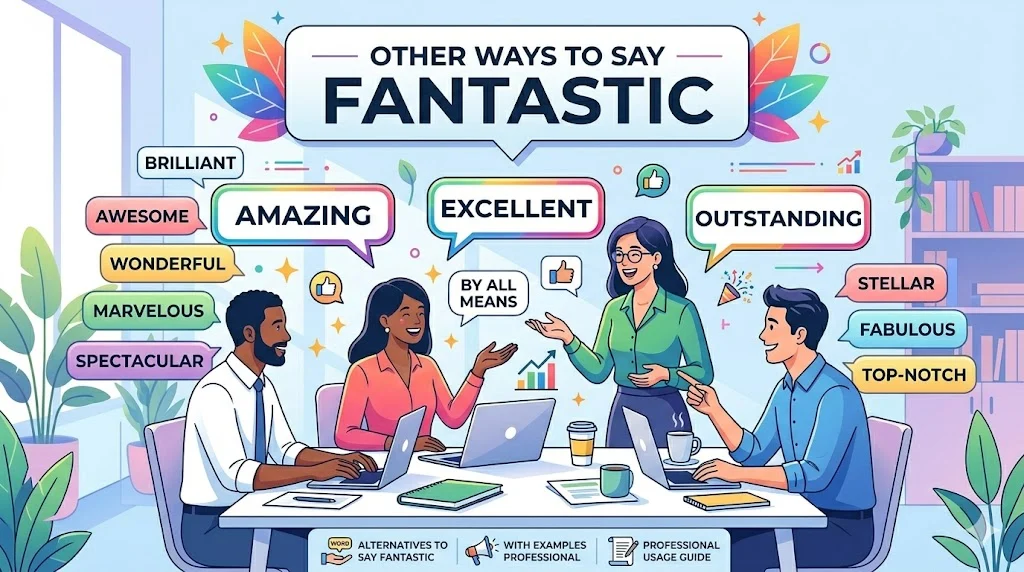
Looking for other ways to say fantastic? Try:
Amazing, Excellent, Incredible, Outstanding, Wonderful.
These alternatives help you sound more expressive, professional, and fluent in both spoken and written English.
The word “fantastic” is widely used to express strong approval, excitement, or admiration. It’s a powerful adjective but because it’s so common, it can quickly become repetitive.
Learning alternatives to “fantastic” allows you to expand your vocabulary, improve communication, and better match tone in different contexts from casual conversations to professional emails.
It also helps you express excitement in English more naturally, using professional reaction phrases or informal expressions in English depending on the situation.
“The more ways you have to say ‘fantastic,’ the more natural and confident your English will sound.”
Quick Categories
Formal Alternatives to “Fantastic”
- Excellent
- Outstanding
- Remarkable
- Exceptional
Pro Tip: Use these in reports, presentations, and professional communication.
Casual Alternatives
- Awesome
- Great
- Cool
- Super
Pro Tip: Perfect for everyday conversations and friendly interactions.
Professional Alternatives
- Impressive
- High-quality
- First-rate
- Top-notch
Pro Tip: Ideal for workplace feedback or performance reviews.
Informal Expressions
- Epic
- Brilliant
- Amazing
- Fabulous
Pro Tip: Use in social settings, but avoid in formal writing.
Common Mistakes
- Overusing “fantastic”
Example: “Fantastic job, fantastic work, fantastic idea.” - Using informal synonyms in formal writing
Example: “Your report is awesome.” - Choosing the wrong tone
Example: “Epic performance” in a business meeting - Lack of specificity
Example: “Fantastic work” (What exactly was good?) - Ignoring context
Example: “Brilliant!” in serious or negative situations
What Does “Fantastic” Mean?
Definition: Something extremely good, impressive, or excellent.
Grammar: Adjective
Example: “She did a fantastic job on the presentation.”
When to Use “Fantastic”
- Praising work or performance
- Expressing excitement
- Reacting positively to news
- Informal or semi-formal communication
Spoken vs Written: Common in both
Formal vs Informal: More informal but acceptable in semi-professional contexts
Is It Professional or Polite to Say “Fantastic”?
- Polite? ✔️ Yes
- Professional? ❌ Not always
Example:
“Fantastic work on the report” is acceptable, but “Excellent work” sounds more professional.
Pros and Cons of Using “Fantastic”
Pros:
- Simple and natural
- Friendly tone
- Common usage
- Easy to understand
Cons:
- Too informal for work
- Overused
- Limited emotional range
- Not suitable for formal writing
“Choosing the right synonym can instantly elevate your tone from casual to professional.”
Other Ways to Say “Fantastic” With Examples
These alternatives will help you sound more fluent, confident, and natural in different situations.
Use them according to tone, context, and audience to express excitement, admiration, or approval.
- Phrase: Amazing
Meaning: Extremely impressive
Explanation: A very common strong compliment
Example Sentence: “That performance was amazing.”
Best Use: general praise
Worst Use: formal reports
Tone: positive, energetic
Context Variability: casual / spoken
- Phrase: Excellent
Meaning: Extremely good quality
Explanation: More professional than fantastic
Example Sentence: “You did an excellent job.”
Best Use: workplace
Worst Use: casual slang
Tone: formal, respectful
Context Variability: professional
- Phrase: Incredible
Meaning: Hard to believe due to quality
Explanation: Strong emotional reaction
Example Sentence: “That result is incredible.”
Best Use: achievements
Worst Use: neutral feedback
Tone: enthusiastic, strong
Context Variability: casual / spoken
- Phrase: Outstanding
Meaning: Exceptionally good
Explanation: Highly professional praise
Example Sentence: “Outstanding performance by the team.”
Best Use: business
Worst Use: casual chat
Tone: formal, strong
Context Variability: professional
- Phrase: Wonderful
Meaning: Very pleasing
Explanation: Soft, warm compliment
Example Sentence: “That’s wonderful news.”
Best Use: conversations
Worst Use: technical writing
Tone: warm, polite
Context Variability: casual
- Phrase: Impressive
Meaning: Worth admiration
Explanation: Focuses on achievement
Example Sentence: “Your work is very impressive.”
Best Use: interviews
Worst Use: casual slang
Tone: professional
Context Variability: professional
- Phrase: Remarkable
Meaning: Worth noticing
Explanation: Highlights uniqueness
Example Sentence: “That’s a remarkable improvement.”
Best Use: reports
Worst Use: casual talk
Tone: formal
Context Variability: professional
- Phrase: Exceptional
Meaning: Better than average
Explanation: High-level praise
Example Sentence: “She delivered exceptional results.”
Best Use: performance review
Worst Use: informal
Tone: formal
Context Variability: professional
- Phrase: Brilliant
Meaning: Extremely clever or impressive
Explanation: Common in British English
Example Sentence: “Brilliant idea!”
Best Use: casual/pro
Worst Use: strict formal
Tone: energetic
Context Variability: mixed
- Phrase: Fabulous
Meaning: Extremely good
Explanation: Stylish and expressive
Example Sentence: “You look fabulous!”
Best Use: social
Worst Use: reports
Tone: expressive
Context Variability: casual
- Phrase: Awesome
Meaning: Very impressive
Explanation: Informal enthusiasm
Example Sentence: “That’s awesome!”
Best Use: friends
Worst Use: workplace
Tone: informal
Context Variability: casual
- Phrase: Great
Meaning: Very good
Explanation: Simple and universal
Example Sentence: “Great job today.”
Best Use: all contexts
Worst Use: none
Tone: neutral
Context Variability: all
- Phrase: Terrific
Meaning: Very good
Explanation: Slightly old-fashioned but useful
Example Sentence: “You did a terrific job.”
Best Use: polite speech
Worst Use: slang
Tone: positive
Context Variability: mixed
- Phrase: Superb
Meaning: Extremely high quality
Explanation: Elegant and strong
Example Sentence: “Superb performance.”
Best Use: formal praise
Worst Use: casual
Tone: formal
Context Variability: professional
- Phrase: Phenomenal
Meaning: Extraordinary
Explanation: Strong emphasis
Example Sentence: “Phenomenal success.”
Best Use: achievements
Worst Use: small tasks
Tone: strong
Context Variability: mixed
- Phrase: Top-notch
Meaning: Highest quality
Explanation: Semi-professional
Example Sentence: “Top-notch service.”
Best Use: reviews
Worst Use: formal writing
Tone: confident
Context Variability: mixed
- Phrase: First-rate
Meaning: Best quality
Explanation: Professional tone
Example Sentence: “First-rate results.”
Best Use: business
Worst Use: casual
Tone: formal
Context Variability: professional
- Phrase: Magnificent
Meaning: Extremely impressive
Explanation: Dramatic praise
Example Sentence: “Magnificent view.”
Best Use: descriptive
Worst Use: routine tasks
Tone: expressive
Context Variability: mixed
- Phrase: Spectacular
Meaning: Visually impressive
Explanation: Strong visual praise
Example Sentence: “Spectacular performance.”
Best Use: events
Worst Use: daily tasks
Tone: vivid
Context Variability: casual
- Phrase: Marvelous
Meaning: Very good
Explanation: Polite, classic
Example Sentence: “Marvelous work.”
Best Use: polite speech
Worst Use: modern slang
Tone: polite
Context Variability: mixed
- Phrase: Stellar
Meaning: Excellent
Explanation: Modern professional tone
Example Sentence: “Stellar performance.”
Best Use: workplace
Worst Use: formal writing
Tone: modern
Context Variability: professional
- Phrase: Perfect
Meaning: Without flaws
Explanation: Absolute praise
Example Sentence: “That’s perfect.”
Best Use: general
Worst Use: overuse
Tone: strong
Context Variability: all
- Phrase: Delightful
Meaning: Very pleasing
Explanation: Gentle praise
Example Sentence: “That was delightful.”
Best Use: polite
Worst Use: technical
Tone: soft
Context Variability: casual
- Phrase: Splendid
Meaning: Very impressive
Explanation: Formal and classic
Example Sentence: “Splendid work.”
Best Use: formal
Worst Use: casual slang
Tone: formal
Context Variability: professional
- Phrase: Glorious
Meaning: Extremely satisfying
Explanation: Emotional praise
Example Sentence: “Glorious victory.”
Best Use: storytelling
Worst Use: office
Tone: expressive
Context Variability: casual
- Phrase: Epic
Meaning: Very impressive
Explanation: Modern slang
Example Sentence: “That was epic.”
Best Use: social media
Worst Use: workplace
Tone: informal
Context Variability: casual
- Phrase: Cool
Meaning: Good or interesting
Explanation: Casual approval
Example Sentence: “That’s cool.”
Best Use: friends
Worst Use: formal
Tone: informal
Context Variability: casual
- Phrase: Brilliantly done
Meaning: Done very well
Explanation: More specific praise
Example Sentence: “That was brilliantly done.”
Best Use: feedback
Worst Use: slang
Tone: professional
Context Variability: mixed
- Phrase: Highly commendable
Meaning: Worth praise
Explanation: Formal recognition
Example Sentence: “Highly commendable effort.”
Best Use: reports
Worst Use: casual
Tone: formal
Context Variability: professional
- Phrase: Exemplary
Meaning: Serving as a model
Explanation: Very formal praise
Example Sentence: “Exemplary leadership.”
Best Use: professional
Worst Use: casual
Tone: formal
Context Variability: professional
“Professional vocabulary isn’t about sounding complex it’s about sounding appropriate.”
Mini Quiz / Self-Check
- Best professional alternative?
A. Awesome
B. Outstanding
C. Cool
Answer: B - Casual conversation option?
A. Exemplary
B. Epic
C. Exceptional
Answer: B - Formal report word?
A. Amazing
B. Splendid
C. Excellent
Answer: C
Comparison Table: Top Alternatives
| Phrase | Tone | Best Use |
|---|---|---|
| Excellent | Formal | Workplace |
| Outstanding | Formal | Performance review |
| Amazing | Casual | General use |
| Impressive | Professional | Interviews |
| Superb | Formal | High praise |
| Great | Neutral | All contexts |
| Phenomenal | Strong | Achievements |
| Top-notch | Semi-pro | Reviews |
| Exceptional | Formal | Reports |
| Brilliant | Mixed | Casual/pro |
FAQs
1. What is the most professional synonym for fantastic?
“Excellent” or “Outstanding” are the best professional choices.
2. Can I use “fantastic” in business emails?
Yes, but use “Excellent” for a more formal tone.
3. What is a casual synonym?
“Awesome,” “Cool,” or “Epic.”
4. How do I sound more advanced?
Use words like “Exceptional,” “Remarkable,” or “Exemplary.”
5. Is “amazing” better than “fantastic”?
It depends on context; both are similar but “amazing” is more common.
Conclusion
Learning other ways to say fantastic helps you:
- Communicate more clearly
- Match tone to context
- Sound more fluent and confident
Practice using these alternatives daily to improve your vocabulary and express excitement in English naturally.

Owen Price is a skilled content writer at Synofind.com, known for crafting clear, engaging and reader-focused content. He brings a thoughtful approach to research and storytelling, ensuring every piece is accurate, concise and easy to understand.