Last Updated on May 9, 2026
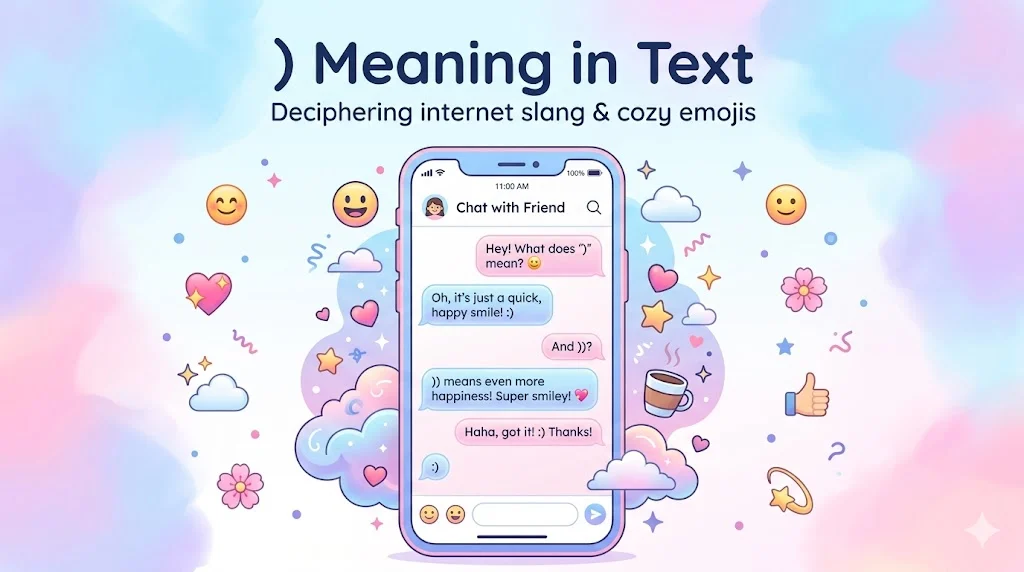
In text messages, “)” is commonly used as a minimalist smile or friendly tone indicator. It usually replaces the emoticon “:)” and makes messages feel warmer or more casual.
People often use “)” to make messages feel:
- warmer
- softer
- friendlier
- less serious
Example:
- “Okay )”
- “See you later )”
- “That was funny )”
The symbol may look small, but it can completely change the tone of a message.
Digital communication often lacks facial expressions and voice tone. Because of that, people use emojis, punctuation, and symbols to express emotions.
One of the simplest examples is the closing parenthesis “).”
Although it may seem unusual at first, many internet users use it as a minimalist smile. Instead of typing “:)” or using emojis, they type only “)” to sound casual and friendly.
This style became especially popular in:
- texting culture
- online chats
- gaming communities
- social media messaging
It is simple, fast, and emotionally expressive.
Origin of ) in Text Messaging
The symbol “)” comes from traditional emoticons that became popular during the early internet era.
Originally, people typed:
- 🙂 = smile
- 🙁 = sad face
- 😉 = wink
Over time, internet users began simplifying emoticons by removing the colon.
So:
- 🙂 became )
- 🙁 became (
This minimalist style spread across texting apps, forums, and online gaming chats.
Today, many people use “)” naturally in conversations without even thinking about it.
How ) Changes the Tone of a Message
A simple “)” can make a message sound more positive and relaxed.
Compare these examples:
| Without ) | With ) |
|---|---|
| “Okay.” | “Okay )” |
| “Sure” | “Sure )” |
| “Thanks” | “Thanks )” |
The second versions feel softer and friendlier.
That is why many users add “)” at the end of messages.
Examples of ) in Text Messages
Friendly Conversation
- “Good morning )”
- “Hope your day goes well )”
Casual Reply
- “No problem )”
- “I understand )”
Flirty Tone
- “You looked cute today )”
- “Maybe we should meet again )”
Gaming or Online Chats
- “Nice game )”
- “You did well )”
Meaning of Multiple Parentheses in Texting
Sometimes people use more than one closing parenthesis.
Examples:
- ))
- )))
- ))))))
The more parentheses used, the friendlier or happier the tone usually becomes.
Example
- “Thank you ))”
- “That was amazing )))”
In some online cultures, especially Eastern European internet communities, multiple parentheses are extremely common as emotional indicators.
) Meaning Table With Context
| Symbol | Meaning | Tone |
|---|---|---|
| ) | Small smile | Friendly |
| )) | Bigger smile | Happier |
| ))) | Strong positive emotion | Excited |
| ( | Sad or disappointed tone | Negative |
) vs Emoji Smiles
Many people now use emojis instead of emoticons, but “)” still remains popular because it feels simple and casual.
| Symbol | Style | Example |
|---|---|---|
| ) | Minimalist emoticon | “See you later )” |
| 🙂 | Classic emoticon | “Thanks :)” |
| 😊 | Emoji | “Good job 😊” |
Some users prefer “)” because it looks less dramatic and more natural.
Why People Use ) Instead of Emojis
There are several reasons why users prefer “)” over emojis.
Faster Typing
Typing one symbol is quicker than opening emoji menus.
Minimalist Style
It feels cleaner and more subtle.
Casual Tone
It sounds relaxed and natural.
Internet Culture
Older internet users and gamers often prefer classic text symbols.
) in Social Media Culture
The symbol “)” is common across many social media platforms.
Popular Platforms
- Instagram DMs
- Snapchat
- Discord
- Telegram
- Twitter/X
People use it in comments, captions, and private messages to soften tone.
Example:
- “Love this photo )”
- “You’re funny ))”
) in Relationships and Flirting
The symbol “)” is often used in romantic or flirty conversations because it adds warmth without looking too intense.
Examples:
- “Miss you )”
- “You looked amazing today ))”
- “Can’t wait to talk later )”
It can make messages feel more personal and emotionally soft.
) in Gaming Communities
Gamers frequently use “)” during chats because it is fast and lightweight.
Examples:
- “Good luck )”
- “Nice teamwork ))”
- “GG )”
Gaming communication values speed, so simple symbols are preferred.
Tone Variations of )
The meaning of “)” changes depending on context and punctuation.
Friendly Tone
- “Sure )”
- “Thanks ))”
Warm and positive.
Flirty Tone
- “Maybe )”
- “You’re sweet ))”
Playful and soft.
Sarcastic Tone
Sometimes “)” can sound passive-aggressive depending on context.
Example:
- “Okay then )”
Tone depends heavily on conversation style.
Emotional Tone
Using many parentheses can show excitement.
Example:
- “That was incredible )))))”
) Compared With Similar Text Symbols
🙂 vs )
| Symbol | Meaning | Style |
|---|---|---|
| ) | Minimal smile | Modern and subtle |
| 🙂 | Traditional smile | Classic emoticon |
😊 vs )
| Symbol | Meaning | Style |
|---|---|---|
| ) | Soft friendliness | Minimal |
| 😊 | Clear happiness | Expressive emoji |
) vs XD
| Symbol | Meaning | Usage |
|---|---|---|
| ) | Light smile | Casual tone |
| XD | Laughing expression | Strong humor |
Alternate Meanings of )
Although “)” is usually a smile indicator, meaning can vary depending on context.
Possible Interpretations
| Meaning | Context |
|---|---|
| Smile | Casual texting |
| Flirty tone | Romantic chats |
| Softened response | Friendly conversation |
| Passive-aggressive tone | Sarcastic context |
Context is always important.
Why ) Became Popular
The popularity of “)” comes from its simplicity.
People like it because:
- It is easy to type
- It feels natural
- It softens conversations
- It works on all devices
- It fits minimalist internet culture
Unlike large emojis, “)” feels subtle and less exaggerated.
When Not to Use )
Although common in casual chats, “)” may not fit every situation.
Avoid using it in:
- professional emails
- academic writing
- legal documents
- formal business communication
In formal settings, full sentences and professional tone work better.
Common Mistakes When Using )
Overusing Parentheses
Too many symbols can look confusing.
Example:
- “Okay ))))))))))”
Misunderstanding Tone
Some people may interpret “)” differently depending on culture or personality.
Using It in Formal Messages
It can appear unprofessional in serious communication.
How to Respond to )
Here are natural responses when someone uses “)” in text.
Friendly Replies
- “😊”
- “Glad to hear that )”
- “Haha nice ))”
Flirty Replies
- “You’re cute )”
- “Maybe I am ))”
Casual Replies
- “Okay )”
- “Sounds good ))”
Cultural Influence of ) in Online Communication
The symbol “)” became part of internet culture because people wanted emotional expression without typing long messages.
It reflects:
- digital minimalism
- fast communication
- casual friendliness
- online emotional cues
Even with modern emojis available, many users still prefer “)” because it feels authentic and relaxed.
FAQs
What does ) mean in texting?
It usually represents a small smile or friendly tone in text messages.
Why do people use ) instead of :)?
People often prefer “)” because it is simpler, faster, and more minimalist.
What does )) mean in text?
Double parentheses usually show stronger happiness or friendliness.
Can ) be flirty?
Yes, it can add a soft or playful tone in romantic conversations.
Is ) considered an emoji?
No, it is technically an emoticon or text symbol, not an emoji.
What does ( mean in texting?
An opening parenthesis “(” often represents sadness or disappointment.
Is ) rude in messages?
Usually no, but tone and context matter.
Can ) be used professionally?
It is better avoided in formal or professional communication.
Conclusion
The symbol “)” may seem tiny, but it carries significant emotional meaning in digital communication. Most commonly, it acts as a minimalist smile that softens messages and makes conversations feel warmer and friendlier.
From texting and gaming to flirting and social media, “)” remains one of the simplest yet most expressive internet symbols. Its popularity comes from speed, simplicity, and emotional subtlety. While emojis dominate modern messaging, many users still prefer “)” because it feels natural and effortless.
Understanding the meaning of “)” helps you better interpret tone and communicate more effectively in online conversations.
Read More Related Articles:
- “No Cap” Meaning Explained: Slang That Confuses Everyone In 2026
- ND Meaning in Text | Hidden Slang That Confuses Everyone In 2026
- Based Meaning in Slang: Everything You Need to Know In 2026

Owen Price is a skilled content writer at Synofind.com, known for crafting clear, engaging and reader-focused content. He brings a thoughtful approach to research and storytelling, ensuring every piece is accurate, concise and easy to understand.