Last Updated on April 28, 2026
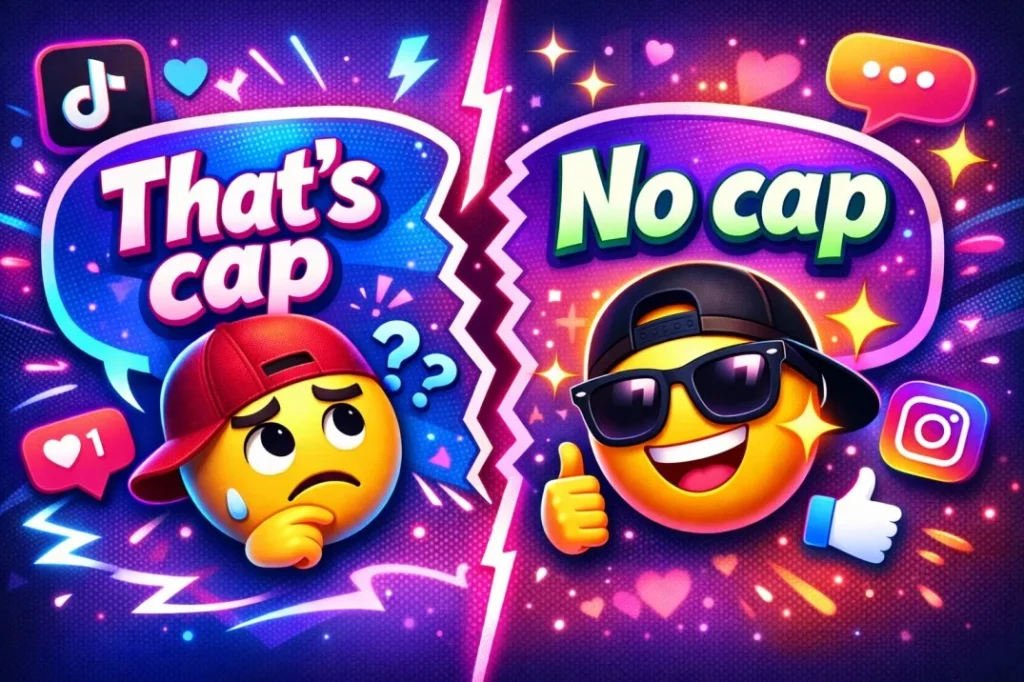
Cap (slang) means a lie or false statement. “No cap” means no lie or telling the truth. People use it to confirm honesty or to call out something that is exaggerated or untrue in casual conversations, especially in online communication and youth slang.
If you spend even a little time on social media platforms like TikTok, Twitter (X), Instagram, or Snapchat, you’ve probably come across the word “cap.” It shows up in comments, captions, memes, and even casual chats between friends. At first glance, it might seem confusing or random, but in reality, it carries a very clear meaning in modern slang.
The phrase “cap meaning slang” has become widely searched because people want to understand what “cap” or “no cap” actually means in everyday conversation. It is short, expressive, and often used to confirm honesty or call out exaggeration.
What Does “Cap” Mean in Slang?
In simple terms, “cap” is used when someone is not being truthful. It can also mean exaggeration or something that is not real. When someone says “that’s cap,” they are basically saying “that’s a lie.”
On the other hand, when someone says “no cap,” they are emphasizing honesty. It means “I’m not lying” or “I’m being completely serious.”
Quick breakdown:
- Cap = lie or false claim
- No cap = truth or no exaggeration
This slang is widely used in informal digital communication, especially among younger audiences.
Origin of “Cap” Slang
The slang “cap” is believed to have originated in African American Vernacular English (AAVE). Over time, it became popular through hip hop culture and rap music. Artists used it in lyrics to describe dishonesty or exaggeration.
Later, social media platforms helped spread it globally. TikTok, in particular, played a major role in making phrases like “no cap” go viral among teenagers and young adults.
Today, it is no longer limited to one community. It is part of mainstream internet language used across different countries and cultures.
Why “Cap” Became So Popular
There are several reasons behind the popularity of this slang term:
- It is short and easy to type
- It sounds catchy and expressive
- It fits perfectly in memes and short videos
- It is widely used in music and pop culture
- Social media boosted its visibility globally
Because of its simplicity, it quickly replaced longer expressions like “you are lying” or “I am being honest.”
How “Cap” Is Used in Real Life Conversations
The word “cap” is flexible and can be used in different ways depending on the context. It usually appears in casual conversations rather than formal writing.
Common usage patterns:
- Calling out lies
- Confirming truth
- Reacting to surprising statements
- Emphasizing honesty
Let’s explore how it appears in real situations.
Examples of “Cap” in Different Contexts
Here are practical examples to help you understand how the slang works in conversation:
Table 1: Real Life Usage Examples
| Situation | Example Sentence | Meaning |
|---|---|---|
| Friend exaggerating | “I ran 10 miles in 20 minutes.” “That’s cap.” | That is not true |
| Honest statement | “I actually studied all night.” “No cap?” | Are you serious and honest |
| Bragging online | “I’m the best gamer in the city.” “Cap 😂” | That is exaggerated or false |
| Truth emphasis | “No cap, this is the best movie I’ve seen.” | Being completely honest |
| Doubt reaction | “I won a million in lottery.” “Bro that’s cap.” | I don’t believe you |
Tone and Emotional Meaning of “Cap”
The tone of “cap” changes depending on how it is used. It can feel playful, skeptical, or serious depending on the situation.
Common tones include:
- Playful teasing among friends
- Dismissive reaction to exaggeration
- Strong emphasis on truth when saying “no cap”
- Light sarcasm in online comments
For example, among friends, “cap” is often said jokingly without any offense. However, in serious arguments, it can feel like directly calling someone a liar.
“Cap” vs “No Cap”: What Is the Difference?
Understanding the difference between these two phrases is important because they are opposites.
Table 2: Cap vs No Cap Comparison
| Term | Meaning | Usage | Example |
|---|---|---|---|
| Cap | Lie or false statement | Used to reject or doubt something | “That’s cap, you didn’t do that.” |
| No cap | Truth or honesty | Used to emphasize sincerity | “No cap, I love this song.” |
In short, one denies truth while the other confirms it.
Related Slang Terms You Should Know
Modern internet slang often overlaps. Here are some related terms that are commonly used alongside “cap.”
Table 3: Related Slang Terms
| Slang Term | Meaning | Similarity to Cap |
|---|---|---|
| Lie | False statement | Directly similar |
| Fake | Not real or authentic | Similar meaning |
| Flex | Showing off | Sometimes linked with exaggeration |
| Bet | Agreement or confirmation | Opposite usage context |
| Facts | Truth or agreement | Similar to “no cap” |
These terms often appear together in online conversations and meme culture.
Alternate Meanings of “Cap”
While slang dominates modern usage, “cap” also has other meanings depending on context.
Non slang meanings include:
- A protective cover or lid, like bottle cap
- Military rank abbreviation in some contexts
- Sports term in football meaning an appearance for a national team
- Financial term referring to limits or caps (like salary cap)
However, in everyday social media language, the slang meaning is the most common.
Polite or Professional Alternatives to “Cap”
Since “cap” is informal, it is not suitable for professional communication. If you want to express similar meaning in formal settings, you can use alternatives.
Better formal options:
- That is not accurate
- I do not believe that
- That seems exaggerated
- I am not sure that is correct
- I can confirm that is true
For “no cap,” you can say:
- Honestly speaking
- To be completely truthful
- I assure you
- Without exaggeration
These alternatives work better in workplace emails, reports, or academic writing.
Why Understanding “Cap Meaning Slang” Matters
Slang evolves quickly, especially in digital spaces. Understanding terms like “cap” helps you:
- Communicate better with younger audiences
- Understand memes and online jokes
- Avoid confusion in social media conversations
- Stay updated with internet culture
- Interpret tone in digital messages correctly
Language is constantly changing, and slang is a big part of modern communication.
Common Misunderstandings About “Cap”
Many people misinterpret this slang at first. Here are some common confusion points:
- Thinking “cap” is related to hats only
- Assuming it has one fixed meaning in all contexts
- Believing it is offensive in all situations
- Confusing it with formal abbreviations
In reality, context determines meaning, especially in slang.
FAQs:
What does cap mean in slang?
Cap means a lie or something that is not true. It is used when someone doubts a statement or believes it is false.
What does no cap mean in texting?
No cap means no lie or being completely honest. People use it to emphasize truthfulness in casual conversation.
Is cap a positive or negative word?
It depends on context. “Cap” is usually negative because it refers to lying, while “no cap” is positive as it shows honesty.
Where did cap slang come from?
It originated in African American Vernacular English and became popular through hip hop music and social media platforms.
Can cap be used in professional writing?
No, it is informal slang and should not be used in business emails, academic papers, or professional communication.
Is no cap still popular in 2026?
Yes, it is still widely used in online conversations, especially among younger internet users.
What is the opposite of cap?
The opposite of cap is “no cap,” which means truth or honesty.
Can cap be used in real life conversations?
Yes, but it is mostly used in informal speech, especially among friends or on social media.
Conclusion:
The slang term “cap” has become a major part of modern digital language. It is simple, expressive, and widely used to call out lies or confirm honesty. While “cap” means a false statement, “no cap” emphasizes truth.
From social media captions to casual conversations, this slang continues to evolve with internet culture. However, it is important to use it in the right context since it is informal and not suitable for professional settings.
Understanding terms like this helps you stay connected with current communication trends and improves your digital fluency.
Read More Related Articles:
- Other Ways to Say Happy Saturday (2026)
- Other Ways to Say Sleep Well: 30 Examples In 2026
- Other Ways to Say Happy Friday (2026)

Liam Reed is a skilled content writer at Synofind.com, known for crafting clear, engaging and well-researched pieces. His work focuses on accuracy, readability and delivering value to readers. He consistently produces content that informs and connects.