Last Updated on May 9, 2026
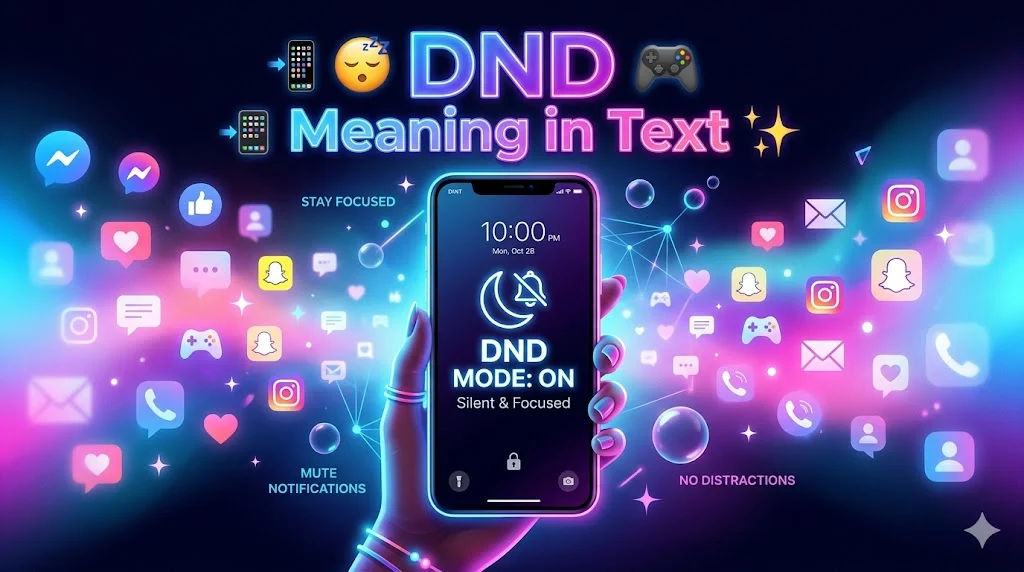
DND in text usually means “Do Not Disturb.” It is commonly used in texting, social media, gaming, and online conversations to indicate that someone is busy, unavailable, sleeping, studying, or does not want interruptions.
Example:
“Going into dnd mode for work.”
Meaning: “Going into do not disturb mode for work.”
Modern communication never really stops. Notifications appear constantly from messaging apps, social media platforms, emails, games, and group chats. Because of this, many people use “DND” to create temporary boundaries and avoid interruptions.
You may have seen someone write “on dnd,” “turning dnd on,” or “sorry I was on dnd.” These phrases have become extremely common online, especially among people who spend a lot of time using smartphones, Discord, WhatsApp, Instagram, Snapchat, or gaming platforms.
DND is popular because it is short, clear, and instantly understandable. Instead of explaining that they are busy or unavailable, users simply type “DND.”
Understanding this abbreviation helps you interpret messages correctly and avoid confusion in online conversations.
What Does DND Mean in Texting?
DND stands for “Do Not Disturb.” It tells others that the person is temporarily unavailable or does not want notifications and interruptions.
Simple Meaning
DND = Do Not Disturb
Example
“Putting my phone on dnd tonight.”
Meaning: “Putting my phone on do not disturb tonight.”
Origin and Rise of DND
The phrase “Do Not Disturb” existed long before smartphones. Hotels often used “Do Not Disturb” signs outside rooms to prevent interruptions.
As technology evolved, mobile phones adopted a “Do Not Disturb” feature that silences calls, alerts, and notifications. Eventually, users shortened the phrase to “DND” in text conversations and online chats.
Its popularity grew because:
- It is short and convenient
- Everyone recognizes the phrase
- It clearly communicates unavailability
- It works across texting, gaming, and social media
Today, DND is used worldwide in both personal and digital communication.
How DND Is Used in Real Conversations
DND is mainly used to explain delayed replies or to let others know someone is busy.
Common usage examples
“Sorry, my phone was on dnd.”
“Going on dnd while studying 📚”
“I’ll reply later, I’m on dnd rn.”
“Putting everything on dnd tonight 😴”
In these examples, DND communicates temporary unavailability.
Tone Variations of DND
Although DND always means “Do Not Disturb,” the tone changes depending on context.
Serious tone
“On dnd for work meetings.”
Professional and focused.
Casual tone
“My phone stays on dnd most nights 😂”
Relaxed and conversational.
Emotional tone
“Going dnd for a while. Need peace.”
Suggests emotional exhaustion or stress.
Gaming tone
“Dnd during ranked match 🎮”
Shows focus during gameplay.
Playful tone
“Dnd mode activated 😎”
Lighthearted and fun.
Examples of DND in Text Messages
Here are realistic examples showing how DND appears in everyday conversations.
Everyday chat examples
“Sorry for late reply, I was on dnd.”
“I turn dnd on while sleeping 😴”
“Going dnd during exams 📚”
“Phone on dnd. Need some quiet.”
“I use dnd when working.”
Social media style examples
- “Dnd mode all weekend ✨”
- “Turning dnd on for self care 😌”
- “Currently on dnd, talk later 💬”
- “Dnd while satiate watching shows 🍿”
These examples show how naturally DND fits into digital communication.
DND in Different Contexts
DND can have slightly different uses depending on the platform or situation.
Smartphone setting
Most commonly refers to silencing notifications.
Example: “My phone is on dnd.”
Social media status
Indicates someone may not reply quickly.
Example: “On dnd tonight.”
Gaming
Used when focusing on gameplay.
Example: “Dnd during match.”
Study or work mode
Shows concentration and reduced availability.
Example: “Going dnd while studying.”
Comparison of DND with Similar Abbreviations
Several abbreviations are used to communicate availability or absence online.
Comparison table
| Abbreviation | Meaning | Purpose |
|---|---|---|
| DND | Do Not Disturb | Avoid interruptions |
| BRB | Be Right Back | Temporary absence |
| AFK | Away From Keyboard | Not currently active |
| OOO | Out Of Office | Work-related absence |
| GTG | Got To Go | Leaving conversation |
Example comparison
“I’m on dnd.” → Avoid interruptions
“BRB.” → Returning soon
“AFK.” → Temporarily away
“GTG.” → Leaving entirely
Is DND Formal or Informal?
DND can be both informal and semi-professional depending on context.
Suitable situations
- Text messages
- Social media chats
- Gaming platforms
- Casual work communication
Less suitable for
- Formal business reports
- Academic writing
- Professional presentations
Formal alternatives
Instead of DND, you can say:
- I am currently unavailable
- Notifications are silenced
- I am focusing right now
- Please do not disturb
- I will respond later
Example transformation
Casual: “On dnd rn.”
Formal: “I am currently unavailable and will reply later.”
Labeled Table: DND Usage in Real-Life Situations
| Situation | Example Sentence | Tone |
|---|---|---|
| Sleeping | “Phone on dnd 😴” | Calm |
| Studying | “Going dnd during revision 📚” | Focused |
| Gaming | “Dnd during ranked match 🎮” | Competitive |
| Work | “On dnd for meetings.” | Professional |
| Self-care | “Need dnd time tonight ✨” | Relaxed |
Why People Use DND Instead of Full Phrase
People use DND because it is:
- Quick to type
- Easy to recognize
- Widely understood
- Perfect for fast communication
- Common across digital platforms
Instead of explaining their situation in detail, users simply type “DND.”
Common Mistakes When Using DND
Even common abbreviations can sometimes create confusion.
Assuming everyone knows it
Some people may not recognize the abbreviation.
Using it too abruptly
Short messages like “dnd” alone can seem cold.
Better example:
“Going on dnd for a while 😊”
Using it excessively
Constantly mentioning DND may sound dismissive.
Alternate Meanings of DND
While “Do Not Disturb” is the most common meaning in texting, DND can occasionally mean other things.
Dungeons & Dragons
A famous tabletop fantasy game.
Example: “We’re playing DND tonight.”
Department-related abbreviations
Rare in casual texting.
However, in everyday online chats, DND almost always means “Do Not Disturb.”
DND Meaning on Snapchat, Instagram, and Discord
Snapchat
Used to explain delayed responses.
Example: “Sorry, I was on dnd 😭”
Common in stories and DMs.
Example: “Dnd mode tonight ✨”
Discord
Very common among gamers.
Example: “Set status to dnd.”
TikTok
Used in relatable posts and captions.
Example: “Me putting my phone on dnd for peace 😂”
Across platforms, DND keeps the same general meaning.
Polite Alternatives to DND
If you want a more respectful or professional tone, use:
- I’m currently unavailable
- I’ll reply later
- Busy right now
- Notifications are muted
- Need some uninterrupted time
Example transformation
Casual: “On dnd rn.”
Polite: “I’m currently unavailable but will respond later.”
FAQs
What does DND mean in texting?
DND means “Do Not Disturb.” It indicates that someone is busy or unavailable.
What does DND mean on a phone?
It refers to a phone setting that silences notifications, calls, and alerts.
Is DND rude in text messages?
No, it is not rude. It simply communicates temporary unavailability.
What does DND mean in gaming?
In gaming, it often means the player does not want interruptions during gameplay.
Can DND have another meaning?
Yes, sometimes it refers to the game “Dungeons & Dragons,” but “Do Not Disturb” is the most common meaning in texting.
Is DND formal or informal?
It is mostly informal but can also appear in casual workplace communication.
Why do people use DND?
People use it to silence distractions and communicate that they may reply later.
Is DND still commonly used in 2026?
Yes, DND remains extremely popular in texting and online communication.
Conclusion:
DND is a widely recognized abbreviation that stands for “Do Not Disturb.” It helps people communicate that they are busy, unavailable, studying, working, gaming, sleeping, or simply taking a break from notifications. Its popularity comes from its simplicity and convenience. Instead of explaining everything in detail, users can quickly type “DND” and instantly communicate their status.
Although it is mostly used informally, DND has become an important part of modern digital communication across messaging apps, gaming platforms, and social media. Understanding DND helps you better navigate online conversations and interpret modern texting culture naturally.
Read More Related Articles:
- Fourty or Forty: Which Spelling Is Correct In 2026
- Truely or Truly: Correct Spelling, Meaning & Usage Explained In 2026
- Flavour or Flavor: Difference for Accurate Usage In 2026

Joshua Bell is a professional content writer at Synofind.com, known for delivering clear, accurate and engaging written content. He focuses on thorough research and thoughtful storytelling to ensure every piece is reliable and easy to understand. His work reflects a strong commitment to quality and credibility.