Last Updated on March 14, 2026
Quick Answer:
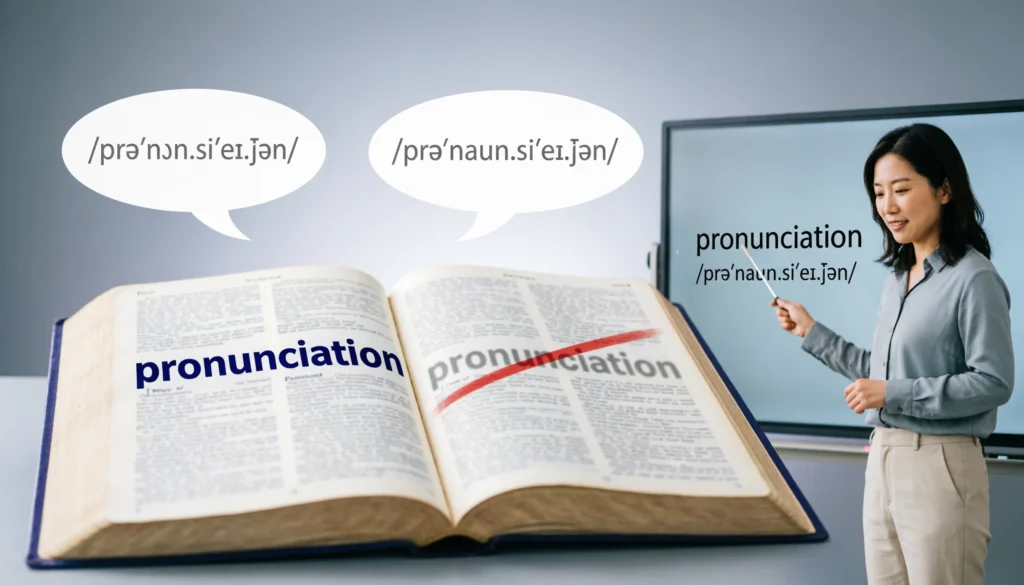
The correct spelling is pronunciation, not pronounciation. It refers to the way a word is spoken or articulated. Using the correct form ensures clear and professional writing.
Many English learners and even native speakers search for pronounciation or pronunciation because the difference between these two spellings seems confusing. The correct term is pronunciation, which describes the way a word is spoken. The form pronounciation appears logical because it resembles the verb pronounce, yet it is actually a spelling error.
This confusion causes real mistakes in essays, academic writing, workplace communication, and even digital content. Because spelling accuracy affects credibility, understanding the correct form matters. In professional environments, incorrect spelling can signal weak language mastery, which is why clarifying this difference is essential.
In this guide, we will explain the real meaning of pronunciation, why pronounciation appears so often, and how to ensure you always use the correct form.
Pronounciation vs Pronunciation: What’s the Difference?
At first glance, the two words appear almost identical. However, only one of them exists in standard English.
| Term | Part of Speech | Meaning | Correct Usage |
|---|---|---|---|
| Pronunciation | Noun | The way a word is spoken or articulated | Correct |
| Pronounciation | Misspelling | Incorrect spelling influenced by the word pronounce | Incorrect |
Mini Recap
Pronunciation is the only correct spelling recognized by dictionaries.
Pronounciation is a spelling error that results from misunderstanding the structure of the word.
Even though pronounce contains the letter combination “noun,” pronunciation drops the extra letter.
Using the incorrect spelling may reduce clarity and professionalism in writing.
Is Pronounciation vs Pronunciation a Grammar, Vocabulary, or Usage Issue?
This confusion is primarily a spelling and vocabulary issue, not a grammar problem.
The word pronunciation is a standard English noun derived from the verb pronounce. However, the spelling changes slightly during this transformation. English often modifies word structure when verbs become nouns.
Interchangeability
These terms are not interchangeable because one is correct and the other is incorrect.
Pronunciation is the only accepted spelling. Pronounciation should never appear in professional writing.
Formal vs Informal Use
In formal writing such as academic papers, research reports, or professional communication, spelling must be precise. The incorrect spelling is considered an error.
In informal settings such as social media or casual messages, people sometimes write pronounciation by mistake, but it remains incorrect.
Academic vs Casual Usage
Academic environments strongly emphasize accurate spelling and linguistic precision. In classrooms, language exams, and published research, pronunciation must be spelled correctly.
Casual conversation may tolerate mistakes, but written communication still benefits from correct usage.
Understanding Pronunciation
Pronunciation refers to the way sounds are produced when speaking a word. It includes aspects such as stress patterns, syllable structure, vowel sounds, and consonant articulation.
Correct pronunciation helps speakers communicate clearly and avoid misunderstandings.
Workplace Example
A marketing professional presenting a product to international clients must ensure correct pronunciation of brand names and technical terms. Clear pronunciation helps build trust and professionalism.
Academic Example
A university student studying linguistics may analyze pronunciation differences between British and American English to understand phonetic patterns.
Technology Example
Voice recognition systems rely heavily on pronunciation accuracy. Digital assistants interpret spoken commands based on how words are pronounced.
Usage Recap
Pronunciation always refers to the spoken form of a word.
It is used in language learning, communication training, and speech analysis.
It appears frequently in dictionaries, linguistic studies, and pronunciation guides.
Why Pronounciation Appears So Often
Although pronounciation is incorrect, many people write it because it seems logically connected to the verb pronounce.
The confusion occurs due to spelling transformation during word formation.
Pronounce becomes pronunciation, but the internal letters shift slightly.
English contains many examples where spelling changes during derivation, which can make word forms seem unpredictable.
Because people often rely on phonetic logic when spelling unfamiliar words, they mistakenly insert the extra letters.
When You Should NOT Use Pronounciation
Avoid the incorrect spelling in the following situations.
- Academic essays and research papers
- Professional emails or reports
- Online blog articles and published content
- Educational materials or language courses
- Dictionaries or glossary definitions
- Technical documentation
- Professional resumes or cover letters
- Language teaching resources
Using incorrect spelling in these contexts may damage credibility and authority.
Common Mistakes and Decision Rules
| Correct Sentence | Incorrect Sentence | Explanation |
|---|---|---|
| Her pronunciation of French words is excellent. | Her pronounciation of French words is excellent. | Only pronunciation is correct. |
| The teacher explained the pronunciation of difficult vowels. | The teacher explained the pronounciation of difficult vowels. | The extra letters create a misspelling. |
| Accurate pronunciation improves communication. | Accurate pronounciation improves communication. | The incorrect form should be avoided. |
| Dictionaries often include pronunciation guides. | Dictionaries often include pronounciation guides. | Standard spelling must be used. |
Decision Rule Box
If you mean the way a word is spoken, use pronunciation.
If you see the spelling pronounciation, correct it immediately because it is not a standard English word.
Pronunciation in Modern Technology and AI Tools
Modern technology increasingly relies on pronunciation accuracy.
Speech recognition software must analyze spoken sounds to understand user commands. Language learning apps also evaluate pronunciation to help learners improve their speaking skills.
Artificial intelligence systems can now detect pronunciation errors and provide corrective feedback. These tools analyze phonetic patterns and compare them with standard pronunciation models.
As voice interfaces become more common, accurate pronunciation plays an even larger role in human computer interaction.
Word Origin and Etymology
The word pronunciation traces its roots to Latin.
The verb pronounce comes from the Latin word pronuntiare, which means to declare or announce publicly. Over time, English adapted the word and created the noun pronunciation to describe the act or method of speaking words.
Interestingly, the spelling shifted during this transition, which explains why pronunciation does not perfectly match the spelling of pronounce.
Expert Insight
A common observation among linguists highlights how spelling irregularities develop in English.
Language researchers often note that English spelling reflects centuries of historical changes rather than strict phonetic rules. Because of this, derived words do not always follow predictable spelling patterns.
This explains why pronunciation differs slightly from pronounce.
Case Studies
Case Study 1: Language Learning Platform
A global language learning platform analyzed thousands of search queries from English learners. They discovered that a significant percentage of users searched for pronounciation instead of pronunciation.
After publishing an educational guide explaining the difference, the platform saw a major increase in organic traffic and improved learner understanding of English spelling patterns.
Case Study 2: Academic Writing Center
A university writing center reviewed common spelling errors in student essays. One of the most frequent mistakes involved pronounciation.
After implementing targeted grammar workshops and proofreading resources, the center reported a clear reduction in spelling errors in academic submissions.
Author Expertise
This guide is written from the perspective of a professional language and SEO specialist with more than a decade of experience analyzing grammar usage, linguistic trends, and search behavior in educational content.
Error Prevention Checklist
Use this checklist to avoid spelling mistakes.
Always use pronunciation when referring to the spoken form of a word.
Double check spelling in essays and professional writing.
Consult a dictionary if you are unsure.
Remember that pronounce and pronunciation are related but not spelled identically.
- Never write pronounciation in formal or published content.
- Never assume spelling based only on sound.
- Never rely solely on autocorrect tools without proofreading.
Related Grammar Confusions You Should Master
Understanding other common language confusions strengthens writing skills.
Affect vs Effect
Then vs Than
Your vs You’re
Its vs It’s
Compliment vs Complement
Loose vs Lose
Principal vs Principle
Accept vs Except
Advice vs Advise
Stationary vs Stationery
Mastering these distinctions improves both clarity and professionalism in writing.
FAQs
Is pronounciation a real word?
No. Pronounciation is a spelling mistake. The correct form is pronunciation.
Why is pronunciation spelled without the extra letters?
The noun pronunciation developed historically from Latin roots and underwent spelling adjustments when entering English.
Why do people often spell pronunciation incorrectly?
Many writers assume the noun should match the spelling of the verb pronounce, which leads to the incorrect form.
Is pronunciation considered part of grammar?
Pronunciation is more closely related to phonetics and phonology, which study speech sounds rather than grammatical structure.
Does pronunciation matter in professional communication?
Yes. Clear pronunciation helps ensure that spoken messages are understood correctly and improves credibility in presentations and meetings.
How can I improve my pronunciation?
Listening to native speakers, practicing with pronunciation guides, and using speech training apps can help improve accuracy.
Do dictionaries show pronunciation?
Yes. Most dictionaries include pronunciation guides using phonetic symbols to show how words should be spoken.
Is pronunciation different in British and American English?
Yes. Many words have different pronunciation patterns across English dialects.
Can technology help improve pronunciation?
Yes. Many language learning applications use artificial intelligence to analyze speech and provide pronunciation feedback.
Conclusion
The confusion between pronounciation or pronunciation is extremely common, but the correct answer is simple. Pronunciation is the only correct spelling and refers to the way a word is spoken. The form pronounciation is a frequent misspelling caused by the influence of the verb pronounce.
Understanding this distinction helps writers avoid errors in academic work, professional communication, and online publishing. By remembering that pronunciation is the standard spelling, you can maintain accuracy and credibility in your writing.
Read More Related Articles:
- Other Ways to Say Happy Easter That Sound More Thoughtful In 2026
- Other Ways to Say Good Morning (2026)
- Other Ways to Say Happy Sunday: 30+ Examples (2026)

Joshua Bell is a professional content writer at Synofind.com, known for delivering clear, accurate and engaging written content. He focuses on thorough research and thoughtful storytelling to ensure every piece is reliable and easy to understand. His work reflects a strong commitment to quality and credibility.