Last Updated on April 1, 2026
Quick Answer
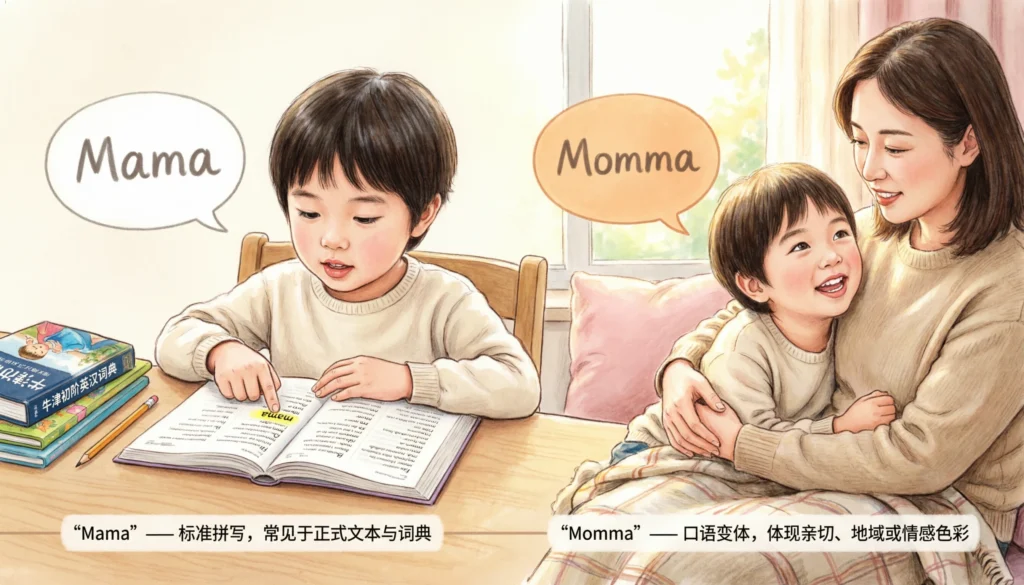
The difference between momma or mama comes down to spelling preference and tone. Both words refer to a mother and are used as affectionate informal terms. “Mama” is the standard spelling used in dictionaries and formal writing, while “momma” is a phonetic variation that reflects regional speech and casual conversation.
The search query momma or mama appears simple, yet it causes real confusion in writing and everyday communication. Both words refer to a mother, but their spelling, tone, and accepted usage can vary depending on context.
“Mama” is the traditional and widely recognized term used to address or describe one’s mother. “Momma,” on the other hand, is a variation that mirrors how the word is pronounced in certain dialects, particularly in informal speech.
This difference matters because choosing the wrong form in formal writing, academic work, or professional communication can make your text appear less polished. Understanding when to use each version helps you write with clarity and confidence.
Momma vs Mama: What’s the Difference?
At their core, both terms refer to the same concept. The difference lies in spelling conventions, tone, and context of usage.
“Mama” is the standard spelling found in dictionaries and widely accepted in writing. It is considered neutral and appropriate in most situations.
“Momma” is a phonetic spelling that reflects spoken language. It often appears in dialogue, storytelling, music lyrics, or informal communication.
Comparison Table
| Feature | Mama | Momma |
|---|---|---|
| Part of speech | Noun | Noun |
| Meaning | Informal term for mother | Informal term for mother |
| Spelling status | Standard dictionary spelling | Nonstandard phonetic variation |
| Typical tone | Neutral or affectionate | Casual or dialect influenced |
| Common contexts | Writing, parenting language, children’s speech | Dialogue, regional speech, storytelling |
Mini Recap
Both words refer to a mother.
“Mama” is the standard spelling accepted in dictionaries.
“Momma” reflects spoken pronunciation and regional dialects.
In most writing situations, “mama” is the safer and more widely accepted choice.
Is Momma vs Mama a Grammar, Vocabulary, or Usage Issue?
The confusion between these two terms is primarily a usage issue, not a strict grammar rule.
Both words function as nouns that refer to a mother. The difference lies in tone, context, and writing style rather than grammatical correctness.
Interchangeability
In spoken language, the two words are often interchangeable. Many people say “momma” while others say “mama,” and listeners usually understand the meaning immediately.
However, in written communication the distinction becomes more noticeable.
Formal vs Informal Context
“Mama” is generally acceptable in a wide range of contexts, including casual writing, storytelling, and family oriented communication.
“Momma” is strongly associated with informal speech and regional dialects, especially in parts of the United States where pronunciation emphasizes the double consonant sound.
Academic vs Casual Writing
In academic or professional writing, neither term is typically used. Writers usually choose the more formal word mother.
When a less formal tone is appropriate, “mama” is generally preferred over “momma” because it aligns with dictionary spelling.
How to Use “Mama” Correctly
“Mama” is widely recognized and appears in dictionaries as an informal noun meaning mother. It is commonly used by children, in parenting discussions, and in affectionate conversation.
Workplace Example
During a team conversation about family friendly policies, someone might say:
Many working parents rely on support networks so that a mama can balance both career and childcare responsibilities.
This usage reflects a conversational tone but remains clear and respectful.
Academic Example
In research about language development, scholars often mention how babies learn words like “mama” early in life because the sound is simple and repetitive.
Technology Example
Parenting apps and baby tracking platforms frequently use the term “mama” when addressing mothers directly.
For example:
Welcome back, mama. Here is your baby’s sleep report for today.
Usage Recap
Use “mama” when you want an affectionate but widely accepted term for mother.
It works well in parenting contexts, storytelling, and casual writing.
It is generally safer than “momma” in professional or published content.
How to Use “Momma” Correctly
“Momma” is a phonetic spelling that reflects how many people pronounce the word in conversation. It often appears in dialogue, cultural storytelling, and regional speech.
Writers use it intentionally to capture a particular voice or tone.
Workplace Example
In creative industries such as marketing or advertising, a storyteller might write:
Every successful entrepreneur remembers the advice their momma gave them about working hard.
Here, the spelling helps convey warmth and authenticity.
Academic Example
In linguistic studies that analyze dialects, researchers may quote speakers using “momma” to represent authentic pronunciation.
For instance:
Participants frequently used the word “momma” when describing childhood memories.
Technology Example
In social media captions or lifestyle blogs, writers sometimes choose “momma” to create a personal and friendly tone.
Example:
Being a working momma means mastering the art of multitasking.
Usage Recap
Use “momma” primarily when representing spoken language or creating a conversational voice.
It is common in storytelling, social media, and cultural writing.
Avoid it in formal or academic contexts unless quoting speech.
When You Should NOT Use Momma or Mama
Even though both words are common, there are situations where they should not be used.
- Formal academic papers where the correct term is “mother.”
- Legal documents that require precise and formal language.
- Scientific writing discussing parental roles.
- Corporate reports or official workplace documentation.
- Professional emails where neutral wording is expected.
- Government or policy related publications.
- Historical research that requires accurate terminology.
- Medical writing discussing maternal health.
In these contexts, using “mother” maintains professionalism and clarity.
Common Mistakes and Decision Rules
Many writers make small but noticeable mistakes when choosing between these words.
Correct vs Incorrect Usage
| Correct Sentence | Incorrect Sentence | Explanation |
|---|---|---|
| My mama always encouraged me to study. | My momma always encouraged me in a research paper. | Informal spelling not suited to academic writing |
| The child called out for his mama. | The child called out for his mother in dialogue meant to sound casual. | Tone mismatch |
| She posted a photo celebrating life as a working momma. | She posted about being a working mama in a dialect quote. | Voice inconsistency |
Decision Rule Box
If you mean the affectionate everyday word for mother in general writing, use mama.
If you are representing spoken language or dialect for storytelling purposes, use momma.
Momma and Mama in Modern Technology and AI Tools
Language technology tools such as speech recognition and predictive text increasingly recognize both spellings.
Voice assistants often interpret “mama” and “momma” the same way because pronunciation is nearly identical.
However, grammar checking software usually flags “momma” as informal. Many writing platforms recommend replacing it with “mama” or “mother” depending on context.
This shows how modern technology reinforces the standard spelling while still acknowledging spoken variations.
Where These Words Come From: A Brief Etymology
The word “mama” has deep linguistic roots. Variations appear in many languages around the world because the sound “ma” is one of the easiest syllables for infants to pronounce.
Languages such as Spanish, Italian, and French all include forms similar to “mama.” Linguists believe these sounds emerged naturally from early speech development rather than being formally invented.
The spelling “momma” appeared later as a phonetic representation of regional pronunciation.
Expert Perspective
A linguistics professor once explained the phenomenon clearly:
“Words like mama appear in nearly every language because the sound is instinctive for infants. The spelling differences reflect culture and dialect rather than separate meanings.”
Case Study 1: Brand Voice in Parenting Media
A parenting blog tested two versions of an article headline.
Version A used the phrase “Tips for Every New Mama.”
Version B used “Tips for Every New Momma.”
The first version attracted significantly more engagement and shares because the spelling felt more universal and professional.
The editorial team later standardized the word “mama” across all content.
Case Study 2: Authentic Dialogue in Storytelling
A novelist writing about rural family life intentionally used the spelling “momma” in dialogue.
Readers responded positively because the spelling matched the characters’ voices and cultural background. The result was stronger emotional authenticity in the narrative.
This example shows how context determines the best choice.
About the Author
This guide was written by a language and SEO specialist with more than a decade of experience analyzing grammar confusion queries and producing high authority educational content for digital publishers.
Error Prevention Checklist
Before choosing between these words, review the following checklist.
Always use “mama” when
You are writing blog articles or educational content
You want a widely accepted informal term
Your audience includes international readers
Never use “momma” when
Writing academic research
Producing corporate or legal documents
Creating professional reports or official communication
Related Grammar Confusions You Should Master
Writers who search for “momma or mama” often struggle with similar language questions.
Understanding these topics can strengthen your writing skills.
Loose vs lose
Affect vs effect
Than vs then
Your vs you’re
Its vs it’s
Who vs whom
Everyday vs every day
Toward vs towards
Further vs farther
Lay vs lie
Mastering these distinctions helps you avoid common writing errors.
FAQs
Is momma or mama the correct spelling?
Both spellings exist, but “mama” is the standard dictionary form. “Momma” is a phonetic variation used mainly in informal or dialect based writing.
Why do some people spell mama as momma?
The spelling “momma” reflects how the word is pronounced in certain regional accents. Writers often use it to capture natural speech.
Is momma grammatically incorrect?
It is not technically incorrect, but it is considered informal. In professional or academic writing, “mama” or “mother” is usually preferred.
Do dictionaries include the word momma?
Some dictionaries list “momma” as a variant spelling, though it is often labeled informal or dialectal.
Which spelling should bloggers use?
Most bloggers choose “mama” because it is widely understood and accepted across audiences.
Is mama used in other languages?
Yes. Variations of “mama” appear in many languages because infants naturally produce the sound “ma” early in speech development.
Should dialogue use mama or momma?
Dialogue can use either spelling depending on the character’s voice. Writers sometimes choose “momma” to represent a specific regional tone.
Is mama considered childish?
Not necessarily. While children often say “mama,” adults also use the term affectionately in many cultures.
Conclusion
The debate around momma or mama is less about correctness and more about context. Both words refer to a mother and carry warmth and familiarity.
“Mama” is the standard spelling that works well in most writing situations. It appears in dictionaries and is widely accepted in blogs, parenting content, and general communication.
“Momma,” meanwhile, reflects spoken language and regional pronunciation. Writers typically use it when capturing authentic dialogue or a casual conversational tone.
Understanding this distinction ensures your writing matches the audience, tone, and purpose of your message.
Read More Related Articles:
- Other Ways to Say Happy Thursday: 30+ Examples (2026)
- Other Ways to Say Happy Birthday: Formal, Casual & Fun Options In 2026
- Other Ways to Say Good Morning (2026)

Liam Reed is a skilled content writer at Synofind.com, known for crafting clear, engaging and well-researched pieces. His work focuses on accuracy, readability and delivering value to readers. He consistently produces content that informs and connects.