Last Updated on April 30, 2026
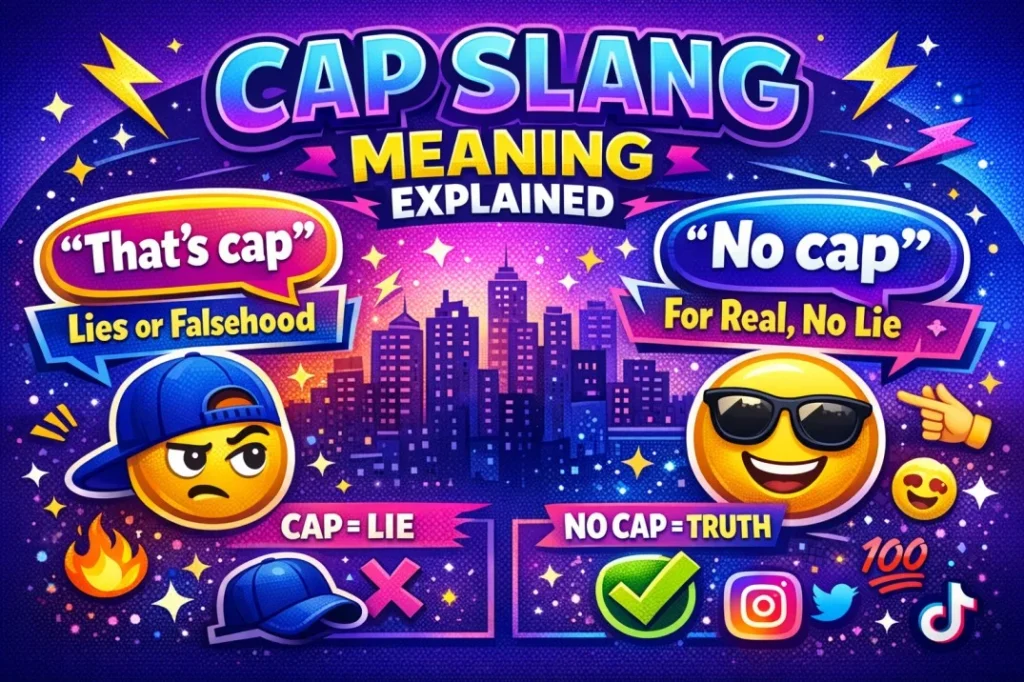
“Cap” in slang means a lie, exaggeration, or something that is not true. Saying “no cap” means you are being honest or telling the truth.
In simple terms, if someone says “that’s cap,” they are calling out something as fake or untrue. If they say “no cap,” they are emphasizing honesty or seriousness.
Language evolves faster than ever, especially online. Social media, music, and internet culture constantly introduce new expressions that quickly become part of everyday conversation. One of the most widely used slang terms today is “cap.” You have probably seen it in comments, heard it in songs, or noticed people casually dropping “no cap” in conversations.
At first glance, the word might seem confusing. After all, “cap” traditionally refers to a hat. In slang, however, it carries a completely different meaning tied to truth and honesty. Understanding how and when to use it can help you stay current, communicate more naturally, and avoid awkward misunderstandings.
This guide breaks down everything you need to know about the slang meaning of cap, including its origin, usage, tone, examples, comparisons, and even professional alternatives.
What Does “Cap” Mean in Slang
In modern slang, “cap” is used to describe something false or misleading.
Here is a quick breakdown:
- Cap means a lie or exaggeration
- No cap means no lie or being truthful
- Stop capping means stop lying
It is often used in casual conversations, especially among younger audiences.
Origin of “Cap” Slang
The slang meaning of “cap” has roots in African American Vernacular English. It began gaining popularity in the early 2010s and later exploded into mainstream usage through social media platforms like TikTok, Twitter, and Instagram.
Hip hop culture also played a major role in spreading the term. Artists used “cap” and “no cap” in lyrics, making the phrases widely recognizable.
Originally, “capping” meant boasting or exaggerating. Over time, the meaning shifted slightly to focus more directly on lying or being dishonest.
Why “Cap” Became So Popular
Several factors contributed to the rapid rise of this slang term:
- Social media trends helped it spread quickly
- Influencers and content creators used it frequently
- Music and pop culture reinforced its meaning
- It is short, catchy, and easy to use
People enjoy phrases that are quick and expressive. “Cap” fits perfectly into modern communication styles where brevity matters.
How to Use “Cap” in Real Conversations
Using “cap” correctly depends on context and tone. It is mostly informal and works best in casual settings.
Common Usage Patterns
- That’s cap
- No cap
- You’re capping
- Stop the cap
Example Sentences
- “You finished that project in one hour? That’s cap.”
- “This is the best food I’ve ever had, no cap!”
- “Bro, stop capping. I saw what really happened.”
Tone and Context Explained
The tone of “cap” can change depending on how it is used. Sometimes it is playful. Other times it can feel dismissive or even confrontational.
Tone Breakdown Table
| Phrase | Tone Type | Meaning Context |
|---|---|---|
| That’s cap | Dismissive | Calling out a lie |
| No cap | Honest | Emphasizing truth |
| Stop capping | Confrontational | Asking someone to stop lying |
| You’re capping | Playful or critical | Suggesting exaggeration |
Examples with Real-Life Context
Understanding context is key to using slang naturally.
Friendly Tone 😊
- “That movie was amazing, no cap!”
- “You’re the funniest person I know, no cap.”
Neutral Tone 😐
- “He said he ran 10 miles today, but that sounds like cap.”
- “She claims she doesn’t like coffee. That’s cap.”
Negative or Dismissive Tone 😑
- “Stop capping. Nobody believes that.”
- “That excuse is pure cap.”
Comparison with Similar Slang Terms
“Cap” is not the only slang term related to truth and lies. Here are some similar expressions and how they differ.
Comparison Table
| Slang Term | Meaning | Usage Difference |
|---|---|---|
| Cap | Lie or false claim | Direct and modern |
| No cap | Truth or honesty | Used for emphasis |
| Facts | Agreement or truth | More positive tone |
| For real | Genuine or serious | Slightly less trendy |
| BS | Nonsense or lies | More aggressive |
Alternate Meanings of “Cap”
Although “cap” is widely known as slang for lying, it can have other meanings depending on context.
Traditional Meanings
- A hat or headwear
- A limit or maximum level
- A cover or lid
Slang Variations
- “Capper” someone who lies often
- “Capping” the act of lying or exaggerating
Context always determines which meaning is intended.
Usage Tips for Beginners
If you are new to using slang, here are some practical tips:
- Use “cap” only in casual conversations
- Avoid using it in professional emails or formal writing
- Pay attention to tone so it does not sound rude
- Listen to how others use it before trying it yourself
Professional and Polite Alternatives
In formal settings, using slang like “cap” can sound unprofessional. Here are better alternatives.
Alternatives Table
| Slang Phrase | Professional Alternative |
|---|---|
| That’s cap | That seems inaccurate |
| Stop capping | Please be honest |
| No cap | Honestly speaking |
| You’re capping | That may not be correct |
Using these alternatives helps maintain clarity and professionalism.
When Not to Use “Cap”
There are situations where using slang can backfire.
Avoid using “cap” in:
- Job interviews
- Academic writing
- Business emails
- Formal presentations
It may come across as unprofessional or unclear to some audiences.
Cultural Impact of “Cap”
“Cap” is more than just a word. It reflects how language adapts to digital communication.
It represents:
- A shift toward shorter expressions
- Influence of youth culture
- The blending of online and offline language
Today, slang like “cap” helps people express opinions quickly and creatively.
Example Conversation Table
| Situation | Dialogue Example | Meaning |
|---|---|---|
| Friends chatting | “You said you woke up at 5 AM? That’s cap.” | Doubting truth |
| Social media post | “This pizza is the best ever, no cap.” | Emphasizing honesty |
| Argument | “Stop capping and tell the truth.” | Calling out dishonesty |
| Casual joke | “You ran faster than me? Cap 😂” | Playful teasing |
FAQs
What does cap mean in texting
In texting, cap means a lie or something that is not true. People use it to call out exaggerations or false statements.
What does no cap mean in slang
No cap means no lie. It is used to emphasize honesty or seriousness.
Is cap a negative word
It can be. It depends on tone. Sometimes it is playful, but it can also sound dismissive.
Where did cap slang come from
It originated from African American Vernacular English and became popular through music and social media.
Can I use cap in formal writing
It is not recommended. Use professional alternatives instead.
What does stop capping mean
It means stop lying or stop exaggerating.
Is cap still popular in 2026
Yes, it remains widely used, especially among younger audiences and online communities.
What is the opposite of cap
“No cap” is considered the opposite, meaning truth or honesty.
Conclusion
The slang term “cap” has become a powerful part of modern communication. It is simple, expressive, and widely understood across digital platforms.
At its core, “cap” means a lie, while “no cap” emphasizes honesty. Knowing how to use these phrases correctly can make your conversations feel more natural and relatable.
That said, context matters. What works in a casual chat may not work in a professional setting. Being aware of tone and audience ensures you use slang effectively without sounding inappropriate.
If you keep these tips in mind, you can confidently use “cap” in everyday conversations while avoiding common mistakes.
Read More Related Articles:
- Other Ways to Say Happy Valentine’s Day In 2026
- Other Ways to Say Happy Wedding Anniversary In 2026
- Other Ways to Say other ways to say nice to meet you 2 (2026)

Owen Price is a skilled content writer at Synofind.com, known for crafting clear, engaging and reader-focused content. He brings a thoughtful approach to research and storytelling, ensuring every piece is accurate, concise and easy to understand.