Last Updated on May 6, 2026
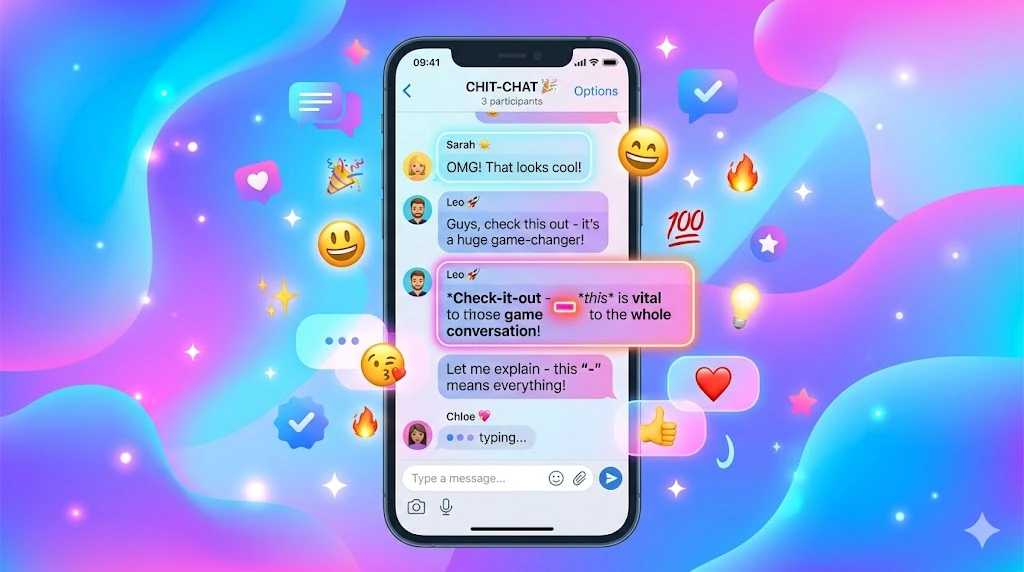
The symbol “-” in text messages is used to create a pause, show hesitation, soften a statement, or leave a thought unfinished. It helps mimic real-life speech patterns, making messages feel more natural, expressive, or emotionally nuanced depending on the context.
You read a message. It looks normal at first. Then you notice it. That tiny “-” sitting quietly between words. Suddenly the message feels different. Softer. Slower. Maybe even a little mysterious. That is the power of modern texting. Small symbols carry big meaning.
In a world where tone can easily get lost, people have started using punctuation creatively to express feelings without saying them directly. And the dash has become one of the most underrated tools in this digital language.
If you have ever wondered why someone types “I mean – it is fine” instead of just “It is fine”, you are about to understand the psychology behind it.
The Origin of “-”: From Grammar Rule to Emotional Signal
A Traditional Writing Tool
Originally, the dash and hyphen had very specific roles in writing.
They were used to connect words, break sentences, or clarify structure.
There was nothing emotional about them. They were purely functional.
The Shift Into Digital Communication
As texting and social media became dominant, language started evolving fast.
People were no longer writing essays. They were sending quick, emotional, real-time messages.
And that created a problem.
Text does not have tone of voice. It does not show facial expressions. It cannot naturally convey hesitation or sarcasm.
So users adapted.
They started using punctuation like “-” to simulate speech patterns.
Why “-” Became So Popular
The rise of this symbol was not random. It solved real communication gaps.
- It feels less harsh than a full stop
- It creates natural pauses like real speech
- It adds personality without extra words
- It avoids overly formal tone
People wanted to sound human, not robotic. The dash made that possible.
How “-” Works in Text Messages: Real Meaning Explained
The meaning of “-” is flexible. It changes depending on context, tone, and intent.
Let’s break down the most common ways it is used.
1. Creating a Natural Pause
One of the most common uses is to mimic how people pause while speaking.
Example:
“I was thinking – maybe we should go later”
This feels like someone thinking in real time.
2. Showing an Unfinished Thought
Sometimes the dash leaves a sentence hanging.
Example:
“I thought you said you would -”
This creates suspense or emotional tension.
3. Softening a Statement
A dash can make a message feel less direct or critical.
Example:
“I mean – it could be better”
Without the dash, the sentence might sound blunt.
4. Adding Drama or Emphasis
Want to make your message more impactful without sounding aggressive
Use a dash.
Example:
“And then he just left – no explanation”
It adds storytelling effect.
5. Expressing Hesitation or Uncertainty
The dash can show doubt or careful thinking.
Example:
“I guess we could – try again”
This feels cautious and unsure.
Example Table: What “-” Really Means in Different Situations
| Message | Interpretation | Tone |
|---|---|---|
| “Wait – what happened?” | Sudden pause for clarity | Curious |
| “It is fine – really” | Trying to reassure | Gentle |
| “You said you would – remember?” | Hinting frustration | Slightly negative |
| “Maybe we could – go tomorrow” | Suggestion with hesitation | Neutral |
| “He just left – like that?” | Shock and disbelief | Dramatic |
Why This Symbol Feels So Natural in Conversations
The secret behind “-” is simple.
It mirrors real human speech.
When we talk, we pause. We hesitate. We change direction mid-sentence.
Texting without these elements feels flat.
The dash brings those missing elements back.
That is why messages using “-” often feel more personal and engaging.
Tone Matters: One Symbol, Multiple Emotions
Tone is everything in texting. The same sentence can feel completely different based on how the dash is used.
Friendly Tone 😊
“Hey – just wanted to check on you”
Feels warm and caring
Neutral Tone 😐
“I think it works – depends on you”
Balanced and open
Slightly Negative Tone 😒
“Yeah – sure”
Can feel sarcastic or dismissive
Emotional Tone 😢
“I did not expect that – at all”
Adds depth and feeling
Comparison Table: “-” vs Other Punctuation in Texting
| Symbol | Meaning | Effect on Tone |
|---|---|---|
| “-” | Pause or shift | Natural and expressive |
| “…” | Ongoing thought | Emotional or uncertain |
| “.” | End of statement | Firm or serious |
| “!” | Excitement | Energetic |
| “,” | Light pause | Neutral |
Dash vs Ellipsis: Subtle but Important Difference
Many people confuse the dash with ellipsis.
They may seem similar, but they create very different feelings.
Dash (-) feels intentional and structured.
Ellipsis (…) feels softer and more emotional.
Example:
“I was thinking – maybe we should talk”
“I was thinking… maybe we should talk”
The first feels clear and direct.
The second feels hesitant and unsure.
Real Life Examples You See Every Day
Friendly Chat
“Hey – how have you been?”
Emotional Conversation
“I really thought things would be different – I guess not”
Casual Suggestion
“We could – maybe try something new”
Slight Frustration
“You said you would help – remember?”
Table: When to Use “-” and When to Avoid It
| Situation | Use It | Why |
|---|---|---|
| Casual texting | Yes | Adds personality |
| Emotional messages | Yes | Enhances tone |
| Social media | Yes | Engaging style |
| Work chats | Sometimes | Keep it minimal |
| Formal emails | No | Too informal |
| Academic writing | No | Not appropriate |
Hidden Meanings People Don’t Always Say Out Loud
Sometimes the dash carries subtle signals that are not obvious.
It can indicate:
- Indirect communication
- Avoiding confrontation
- Emotional hesitation
- Sarcasm or passive tone
For example:
“Sure – do whatever you want”
This might not actually mean approval.
Alternate Meanings of “-” Beyond Texting
Although tone is the main use in messages, the symbol also has other meanings:
- Mathematical subtraction
- Indicating ranges like dates or time
- Connecting compound words
- Separating elements in usernames
Still, in texting, emotional tone remains the primary function.
Professional Alternatives to Using “-”
In formal communication, clarity matters more than style.
Instead of using a dash, you can:
- Use complete sentences
- Replace with commas
- Add polite transitions
Example:
Instead of:
“I think it works – check again”
Use:
“I think it works. Please check again to confirm.”
Common Mistakes to Avoid
Even though “-” is simple, it is easy to misuse.
- Overusing it in every sentence
- Using it in formal writing
- Mixing it randomly with other punctuation
- Assuming everyone understands your tone
Good communication always prioritizes clarity.
Quick Reference Table for Everyday Use
| Purpose | Example | Effect |
|---|---|---|
| Suggestion | “Maybe we could – try later” | Soft tone |
| Emotion | “I really believed you -” | Deep feeling |
| Curiosity | “Wait – what do you mean?” | Engaging |
| Sarcasm | “Yeah – okay” | Slight attitude |
| Drama | “And he just left – no explanation” | Strong impact |
FAQs
What does “-” mean in a text message?
It usually represents a pause, hesitation, or tone shift that makes the message feel more natural.
Is using “-” rude in texting?
It is not inherently rude, but it can sound sarcastic or dismissive depending on context.
Why do people use “-” instead of commas or periods?
Because it feels more conversational and better reflects how people speak.
Does “-” show hesitation or uncertainty?
Yes, it is often used to indicate thinking or doubt.
Can “-” change the meaning of a sentence?
Yes, it can completely change the tone and emotional impact of a message.
Is it okay to use “-” in professional communication?
It is acceptable in casual chats but should be avoided in formal writing.
What is the difference between “-” and “…”?
The dash feels more structured, while ellipsis feels more emotional and trailing.
Should I use “-” frequently in texting?
Use it thoughtfully. Overusing it can make your messages unclear.
Conclusion:
The “-” may seem like a simple symbol, but it plays a powerful role in modern communication. It helps recreate the rhythm of real speech. It adds tone where words alone might fall short. Used correctly, it makes your messages feel more natural, expressive, and engaging. Used carelessly, it can create confusion or unintended tone. The key is awareness. Think about how your message will be read. Consider the context. Use the dash where it enhances clarity and emotion. That is how you turn a tiny symbol into a meaningful communication tool.
Read More Related Articles:
- Set or Sit: Correct Usage & Grammar Explained In 2026
- Cacoon or Cocoon: Correct Spelling, Meaning, and Usage Guide
- Occasion or Ocassion: Correct Spelling, Meaning, and Usage Explained

Owen Price is a skilled content writer at Synofind.com, known for crafting clear, engaging and reader-focused content. He brings a thoughtful approach to research and storytelling, ensuring every piece is accurate, concise and easy to understand.