Quick Answer:
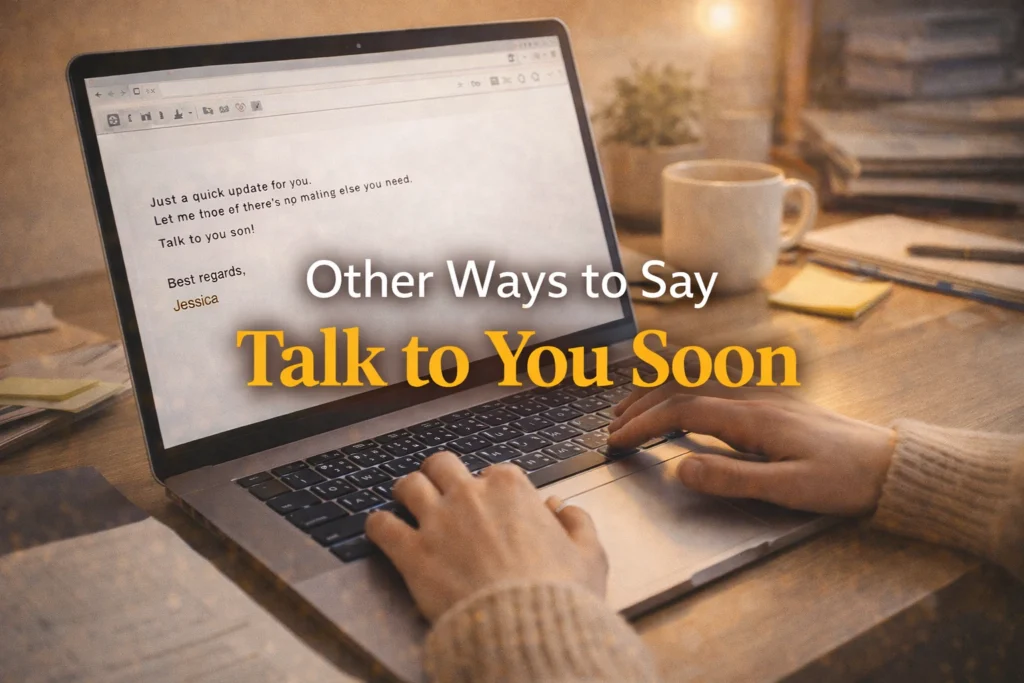
Looking for other ways to say talk to you soon?
Try these: Speak with you soon, Catch up soon, I’ll be in touch, Talk later, Chat soon.
These alternatives help you sound more natural, polite, and professional in both written and spoken English.
The phrase talk to you soon is commonly used at the end of conversations, emails, and messages. It signals that you expect to communicate again in the near future.
While it is friendly and widely accepted, repeating the same phrase can make your English sound repetitive. Learning alternatives to talk to you soon helps you vary tone and sound more fluent.
If you want to express excitement in English or use more polished professional reaction phrases, expanding your closing expressions is essential.
“The way you end a conversation shapes the impression you leave.”
Quick Categories
Formal Alternatives to “Talk to You Soon”
- I look forward to speaking with you
- I will contact you shortly
- I look forward to our next discussion
- I will follow up soon
Pro Tip: Use formal alternatives in business emails and professional meetings.
Casual Alternatives
- Talk later
- Catch you later
- Chat soon
- See you soon
Pro Tip: Casual phrases are best for friends and informal conversations.
Professional Alternatives
- I’ll be in touch
- I will reach out soon
- We will connect shortly
- I look forward to reconnecting
Pro Tip: In business English, clarity about timing improves professionalism.
Informal Expressions
- Catch up soon
- Speak soon
- Till next time
- Talk again soon
Pro Tip: Informal expressions in English work best in friendly texts or relaxed team chats.
“Professional communication requires intentional endings.”
Common Mistakes
- Using it in very formal writing
Incorrect: Talk to you soon in a legal notice. - Using it without real intention
Saying talk to you soon when you have no plan to reconnect. - Overusing it in emails
Ending every message with talk to you soon. - Using it with unclear timing
When urgency requires specific dates instead. - Using casual tone in formal emails
Better: I look forward to speaking with you.
What Does “Talk to You Soon” Mean?
It means we will communicate again in the near future.
Grammatically, it is a future-oriented conversational closing.
Example: Thanks for the update. Talk to you soon.
When to Use “Talk to You Soon”
Use it in:
- Phone calls
- Text messages
- Friendly emails
- Team conversations
- Informal follow ups
Spoken: Very common
Written: Acceptable in informal emails
Formal: Not recommended
Is It Professional or Polite to Say “Talk to You Soon”?
Polite? ✔️ Yes
Professional? ❌ Not in formal business writing
Business example:
Instead of talk to you soon, say:
I look forward to speaking with you next week.
Pros and Cons of Using “Talk to You Soon”
Pros
- Simple and natural
- Friendly tone
- Easy to understand
- Common in spoken English
Cons
- Too informal for formal emails
- Overused
- Vague timing
- Not suitable for official documents
30 Other Ways to Say “Talk to You Soon”
These alternatives will help you sound more fluent, confident, and natural in different situations.
Use them according to tone, context, and audience.
1. Phrase: Speak with you soon
Meaning: We will talk again shortly.
Explanation: Slightly more formal variation.
Example Sentence: Thank you for your time. Speak with you soon.
Best Use: Semi formal email
Worst Use: Legal contract
Tone: Polite, neutral
Context Variability: professional / spoken
2. Phrase: Talk later
Meaning: We will speak later today.
Explanation: Very casual expression.
Example Sentence: I have to go now. Talk later.
Best Use: Friends
Worst Use: Corporate email
Tone: Casual, relaxed
Context Variability: spoken
3. Phrase: Catch you later
Meaning: We will connect again soon.
Explanation: Informal friendly phrase.
Example Sentence: Catch you later after work.
Best Use: Close friends
Worst Use: Formal writing
Tone: Informal, friendly
Context Variability: spoken
4. Phrase: I’ll be in touch
Meaning: I will contact you again.
Explanation: Common professional closing.
Example Sentence: I’ll be in touch regarding the updates.
Best Use: Business email
Worst Use: Personal chat
Tone: Professional, clear
Context Variability: professional
5. Phrase: I will reach out soon
Meaning: I will initiate contact shortly.
Explanation: Professional follow up phrase.
Example Sentence: I will reach out soon with more details.
Best Use: Workplace communication
Worst Use: Casual texting
Tone: Formal, proactive
Context Variability: professional
6. Phrase: Chat soon
Meaning: We will talk casually soon.
Explanation: Light and friendly expression.
Example Sentence: Thanks for the call. Chat soon.
Best Use: Friendly email
Worst Use: Official memo
Tone: Warm, informal
Context Variability: spoken / casual
7. Phrase: See you soon
Meaning: We will meet in person shortly.
Explanation: Used when physical meeting is expected.
Example Sentence: See you soon at the event.
Best Use: In person plans
Worst Use: Remote only meeting
Tone: Friendly, natural
Context Variability: spoken
8. Phrase: I look forward to speaking with you
Meaning: I anticipate our next conversation.
Explanation: Formal and professional closing.
Example Sentence: I look forward to speaking with you next week.
Best Use: Formal email
Worst Use: Text message
Tone: Professional, respectful
Context Variability: professional
9. Phrase: We will connect shortly
Meaning: We will communicate soon.
Explanation: Professional and neutral.
Example Sentence: We will connect shortly to finalize details.
Best Use: Business setting
Worst Use: Friendly chat
Tone: Professional, neutral
Context Variability: professional
10. Phrase: Catch up soon
Meaning: We will talk and share updates.
Explanation: Friendly expression.
Example Sentence: Let’s catch up soon over coffee.
Best Use: Friends or colleagues
Worst Use: Legal document
Tone: Warm, casual
Context Variability: spoken
11. Phrase: Speak soon
Meaning: We will talk in the near future.
Explanation: Short and friendly.
Example Sentence: Thanks for the help. Speak soon.
Best Use: Email closing
Worst Use: Formal report
Tone: Friendly, simple
Context Variability: casual / professional
12. Phrase: I’ll follow up soon
Meaning: I will contact you again with updates.
Explanation: Professional and action oriented.
Example Sentence: I’ll follow up soon with the proposal.
Best Use: Workplace email
Worst Use: Social chat
Tone: Professional, proactive
Context Variability: professional
13. Phrase: Until next time
Meaning: We will meet or talk again later.
Explanation: Friendly and slightly expressive.
Example Sentence: It was great meeting you. Until next time.
Best Use: Events
Worst Use: Urgent email
Tone: Warm, reflective
Context Variability: spoken
14. Phrase: I’ll contact you shortly
Meaning: I will reach out soon.
Explanation: Formal and clear timing.
Example Sentence: I’ll contact you shortly with confirmation.
Best Use: Professional email
Worst Use: Casual text
Tone: Formal, direct
Context Variability: professional
15. Phrase: Let’s reconnect soon
Meaning: We should communicate again soon.
Explanation: Encourages continued communication.
Example Sentence: Let’s reconnect soon to review progress.
Best Use: Business networking
Worst Use: Legal document
Tone: Professional, positive
Context Variability: professional
16. Phrase: I’ll talk to you later
Meaning: We will speak later today.
Explanation: Casual spoken phrase.
Example Sentence: I’m busy now. I’ll talk to you later.
Best Use: Phone calls
Worst Use: Formal email
Tone: Relaxed, casual
Context Variability: spoken
17. Phrase: I look forward to our next conversation
Meaning: I anticipate our future discussion.
Explanation: Polished and formal.
Example Sentence: I look forward to our next conversation.
Best Use: Corporate communication
Worst Use: Text message
Tone: Formal, respectful
Context Variability: professional
18. Phrase: We’ll speak again soon
Meaning: Another conversation will happen soon.
Explanation: Neutral tone.
Example Sentence: We’ll speak again soon to finalize this.
Best Use: Business setting
Worst Use: Casual slang context
Tone: Neutral, clear
Context Variability: professional
19. Phrase: Keep in touch
Meaning: Maintain communication.
Explanation: Encourages ongoing connection.
Example Sentence: It was nice meeting you. Keep in touch.
Best Use: Networking
Worst Use: Urgent follow up
Tone: Friendly, open
Context Variability: spoken / professional
20. Phrase: Looking forward to catching up
Meaning: I am excited to talk again.
Explanation: Expresses positive anticipation.
Example Sentence: Looking forward to catching up next week.
Best Use: Friendly email
Worst Use: Legal document
Tone: Warm, positive
Context Variability: casual / professional
21. Phrase: I’ll check in soon
Meaning: I will contact you to see progress.
Explanation: Often used in mentoring.
Example Sentence: I’ll check in soon about your assignment.
Best Use: Coaching
Worst Use: Formal notice
Tone: Supportive, professional
Context Variability: professional
22. Phrase: Talk again soon
Meaning: We will communicate again soon.
Explanation: Slight variation of original phrase.
Example Sentence: Thanks for your help. Talk again soon.
Best Use: Friendly email
Worst Use: Official contract
Tone: Friendly, natural
Context Variability: spoken
23. Phrase: I’ll update you soon
Meaning: I will provide new information shortly.
Explanation: Clear business intention.
Example Sentence: I’ll update you soon on the progress.
Best Use: Workplace
Worst Use: Social goodbye
Tone: Professional, direct
Context Variability: professional
24. Phrase: We’ll be in touch
Meaning: We will contact you.
Explanation: Often used in interviews.
Example Sentence: Thank you for coming. We’ll be in touch.
Best Use: Recruitment
Worst Use: Personal chat
Tone: Professional, neutral
Context Variability: professional
25. Phrase: Let’s stay connected
Meaning: Maintain ongoing communication.
Explanation: Common in networking.
Example Sentence: Let’s stay connected on LinkedIn.
Best Use: Professional networking
Worst Use: Urgent situation
Tone: Friendly, professional
Context Variability: professional
26. Phrase: I’ll message you later
Meaning: I will send a message later.
Explanation: Casual texting phrase.
Example Sentence: I’ll message you later tonight.
Best Use: Friends
Worst Use: Formal email
Tone: Casual, relaxed
Context Variability: spoken
27. Phrase: Speak to you shortly
Meaning: We will talk very soon.
Explanation: Slightly formal variation.
Example Sentence: Speak to you shortly after the meeting.
Best Use: Semi formal email
Worst Use: Slang context
Tone: Polite, direct
Context Variability: professional
28. Phrase: I anticipate our next discussion
Meaning: I look forward to speaking again.
Explanation: Highly formal expression.
Example Sentence: I anticipate our next discussion regarding the proposal.
Best Use: Executive communication
Worst Use: Casual text
Tone: Formal, polished
Context Variability: professional
29. Phrase: Let’s talk again soon
Meaning: We should communicate again shortly.
Explanation: Friendly and flexible.
Example Sentence: Let’s talk again soon about your plans.
Best Use: Friendly conversation
Worst Use: Legal document
Tone: Warm, inviting
Context Variability: spoken
30. Phrase: I’ll circle back soon
Meaning: I will return to this topic soon.
Explanation: Business oriented phrase.
Example Sentence: I’ll circle back soon with updates.
Best Use: Corporate setting
Worst Use: Casual chat
Tone: Professional, modern
Context Variability: professional
“Strong communication is not just what you say, but how you close the conversation.”
Mini Quiz
- Which phrase is most formal?
a) Catch you later
b) I anticipate our next discussion
c) Talk later - Which is best for networking?
a) Let’s stay connected
b) Talk later
c) I’ll message you later - Which is too casual for a corporate email?
a) I’ll circle back soon
b) Catch you later
c) I’ll follow up soon
Answers: 1 b, 2 a, 3 b
Comparison Table: Top Alternatives
| Phrase | Tone | Best Use |
|---|---|---|
| I look forward to speaking with you | Formal | Business email |
| I’ll be in touch | Professional | Workplace |
| Speak soon | Friendly | Email closing |
| We’ll be in touch | Professional | Interviews |
| Let’s reconnect soon | Professional | Networking |
| Catch up soon | Casual | Friends |
| I’ll follow up soon | Professional | Corporate |
| Keep in touch | Friendly | Networking |
| Talk later | Casual | Phone calls |
| I anticipate our next discussion | Formal | Executive |
FAQs
What are professional alternatives to talk to you soon?
Use I look forward to speaking with you or I’ll be in touch.
Is talk to you soon formal?
It is polite but not suitable for formal business writing.
What is a friendly alternative to talk to you soon?
Try Chat soon or Catch up soon.
How can I sound more professional when ending emails?
Use clear phrases like I will follow up soon or I look forward to our next conversation.
Why learn other ways to say talk to you soon?
It improves tone awareness and helps you sound fluent in both personal and professional communication.
Conclusion
Learning other ways to say talk to you soon improves your fluency and communication flexibility.
Practice different endings based on tone and context. The way you close a conversation leaves a lasting impression.
Read More Related Articles:
- Other Ways to Say Great Job With 30 Examples In 2026
- Other Ways to Say Please Advise: 30+ Examples In 2026
- Other Ways to Say Just to Confirm: 30+ Examples In 2026

Joshua Bell is a professional content writer at Synofind.com, known for delivering clear, accurate and engaging written content. He focuses on thorough research and thoughtful storytelling to ensure every piece is reliable and easy to understand. His work reflects a strong commitment to quality and credibility.