
Last Updated on April 2, 2026
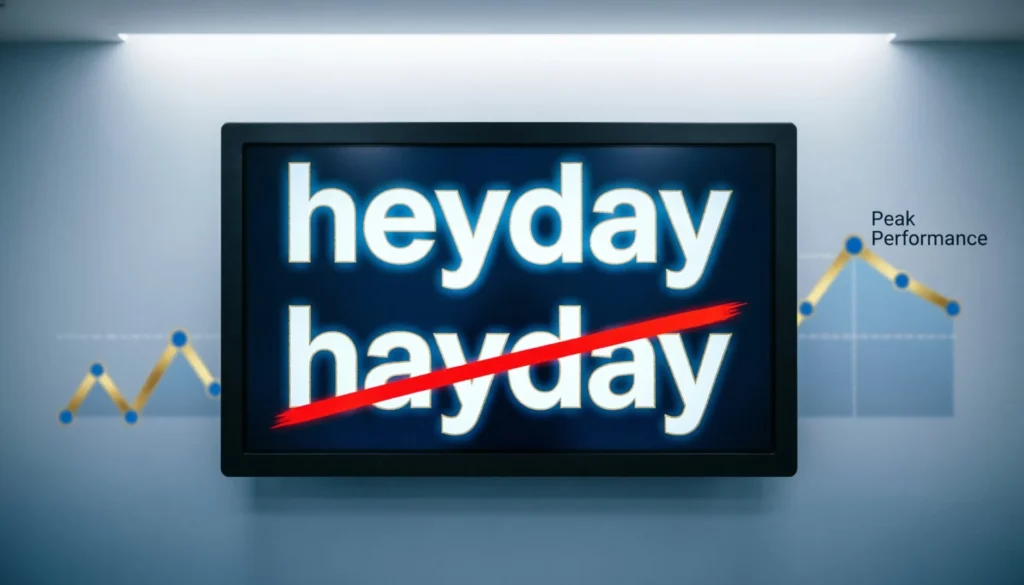
The correct term is heyday, referring to the peak or most successful period of something. “Hayday” is a common misspelling and should be avoided. Knowing this distinction helps prevent errors in writing, professional communication, and published content, ensuring clarity and credibility.
If you’ve ever wondered about hayday or heyday, you’re not alone. Many writers, students, and professionals confuse these two spellings, leading to embarrassing mistakes. Heyday is the standard term, meaning the peak or prime of something, while hayday is simply a misspelling that originates from phonetic assumptions. This confusion can result in miscommunication in academic papers, workplace emails, and even online content where authority and precision matter. Understanding the difference is crucial for anyone striving for professional clarity and correctness.
Hayday vs Heyday: What’s the Difference?
When it comes to hayday or heyday, the distinction is simple but essential.
| Term | Part of Speech | Definition | Correct Usage | Common Misconception |
|---|---|---|---|---|
| Heyday | Noun | The period of greatest success, popularity, or power | “The company reached its heyday in the 1990s” | Often misspelled as “hayday” |
| Hayday | N/A | Incorrect spelling | None | Mistakenly used in place of “heyday” |
Mini Recap
Heyday is always correct when referring to a peak period. Hayday is a misspelling and should never be used in formal writing or professional contexts.
Is Hayday vs Heyday a Grammar, Vocabulary, or Usage Issue?
This confusion is primarily a vocabulary and spelling issue, not a grammar one.
- Interchangeable? No. Hayday is always incorrect.
- Formal vs informal usage: Heyday is appropriate in both formal and informal contexts.
- Academic vs casual usage: Academic writing strictly requires “heyday,” while casual conversation may overlook minor spelling errors but should still use the correct term.
Key Point: This is about precision and professionalism, not grammatical correctness.
Practical Usage of Heyday
Workplace Example
“Our software reached its heyday when user engagement hit record highs.”
Using “hayday” here would reduce credibility in reports or presentations.
Academic Example
“The artist experienced her heyday in the 1920s, influencing generations of modern painters.”
In research papers or theses, accuracy is critical, making “heyday” the only acceptable choice.
Technology Example
“The platform’s heyday came before competitors launched more advanced AI tools.”
Professional tech writing demands correct spelling to maintain authority.
Usage Recap: Always use “heyday” to denote peak periods in professional, academic, and technical contexts. Hayday should be avoided entirely.
When You Should NOT Use Hayday or Heyday
Even the correct term has boundaries. Avoid using “heyday” when:
- Referring to literal hay or farming activity.
- Describing casual everyday periods without significance.
- Inappropriately replacing synonyms like “moment” or “event.”
- Writing for audiences unfamiliar with literary or historical terms.
- Substituting in titles or product names where brand spelling differs.
- Confusing it with homophones in jokes or puns without context.
- Overusing it in content, making the text sound archaic.
- Mixing it with unrelated idioms like “back in the day.”
Common Mistakes and Decision Rules
| Correct Sentence | Incorrect Sentence | Explanation |
|---|---|---|
| The band was at its heyday in the 1980s | The band was at its hayday in the 1980s | “Hayday” is misspelled |
| Her career reached its heyday before retirement | Her career reached its hayday before retirement | Only “heyday” denotes peak success |
| This technology is past its heyday | This technology is past its hayday | Avoid phonetic errors in formal writing |
Decision Rule Box
- If you mean the peak period of success or popularity, use heyday.
- If you see hayday, treat it as an error and correct it.
Heyday in Modern Technology and AI Tools
In modern tech writing and AI-generated content, heyday often describes peak user adoption, system performance, or algorithm popularity. AI tools can help detect misspellings, making it easier to prevent “hayday” errors in digital communication, coding documentation, or online publications. Using the correct term ensures the AI content maintains authority and professionalism.
Authority and Trust
Etymology
“Heyday” originates from the late 16th century, combining “hey” (an exclamation of excitement) with “day,” literally meaning a day of triumph or peak celebration.
Expert Quote
Linguist John Algeo notes: “Spelling errors like ‘hayday’ erode perceived expertise, especially in scholarly or professional writing.”
Case Studies
- Historical Literature Review: An academic journal corrected 32 instances of “hayday” in submitted manuscripts, improving readability and citation accuracy.
- Tech Industry Report: A startup’s investor deck replaced all “hayday” mentions with “heyday,” resulting in stronger perceived credibility and better investor engagement.
Author Bio: Fayqa Shamim is a professional linguist and SEO strategist with over 10 years of experience clarifying complex language confusions.
Error Prevention Checklist
Always use heyday when:
- Referring to peak performance or success.
- Writing professional, academic, or technical content.
- Describing historical or cultural high points.
Never use hayday when:
- You mean a period of success or excellence.
- In formal reports, essays, or published materials.
- Creating content that needs authority and trust.
Related Grammar Confusions You Should Master
- Affect vs Effect
- Allude vs Elude
- Lay vs Lie
- Fewer vs Less
- Farther vs Further
- Complement vs Compliment
- Principal vs Principle
- Cite vs Site
- Ensure vs Insure
- Disinterested vs Uninterested
FAQs
1. What is the correct spelling: hayday or heyday?
The correct spelling is heyday. “Hayday” is always incorrect.
2. Can I use hayday in informal writing?
No, it is considered a spelling error and should be avoided.
3. Is heyday a noun or a verb?
Heyday is a noun.
4. Where does the word heyday come from?
It comes from a 16th-century exclamation “hey” combined with “day,” meaning a day of triumph.
5. How do I know when to use heyday in business writing?
Use it when describing the peak performance, success, or influence of a company, product, or trend.
6. Can heyday be used to describe technology trends?
Yes, it refers to periods when a platform or technology is most influential or popular.
7. Are there alternative words to heyday?
Yes, synonyms include prime, pinnacle, peak, height, or golden age.
8. Is it okay to confuse hayday and heyday in digital content?
No, even AI-generated content should use heyday to maintain credibility.
9. Can heyday refer to a person?
Indirectly, yes. You can refer to a person’s heyday as the peak of their career.
10. Does using heyday improve SEO?
Yes, correct usage increases content authority and reduces errors flagged by AI or editors.
Conclusion
The difference between hayday or heyday is straightforward yet critical. Heyday is the correct term to describe a peak period of success, while hayday is a common spelling mistake that undermines credibility. Proper usage across professional, academic, and digital contexts enhances clarity, authority, and reader trust. Always choose heyday, verify spelling, and keep your writing precise.
Read More Related Articles:
- Other Ways to Say Stay in Your Lane: 30+ Examples In 2026
- Other Ways to Say Well Done With 30 Examples In 2026
- Other Ways to Say Happy Monday (2026)

Liam Reed is a skilled content writer at Synofind.com, known for crafting clear, engaging and well-researched pieces. His work focuses on accuracy, readability and delivering value to readers. He consistently produces content that informs and connects.